5 Chamber Laundry Pods Factory: Advanced Manufacturing and Quality Control
2026-10-28
Most people never think about the engineering inside a laundry pod—until one fails to dissolve or leaves residue. At a five-chamber pod factory, each cavity has a job, and getting that timing right demands more than clever chemistry. LANJIEYA has built its manufacturing around this principle, pairing automated multi-chamber filling with real-time quality checks that most facilities skip. Here's a closer look at what advanced manufacturing and quality control actually mean when every pod has five separate compartments to get right.
The Design Challenge Behind Five Chambers in One Pod
Packing five reactive formulas into a single pod means every internal wall has to do two jobs at once: keep the liquids or powders apart during storage, then fail predictably when the cycle starts. A seam that's even slightly too thick leaves residue in the tray, while one that's too thin cracks during transport and ruins the whole batch.
The real headache is balancing rigidity with solubility. The pod needs to survive being dropped, squeezed, and vibrated across long supply chains, yet disappear completely in water without leaving a film. That pushed us toward water-soluble films with carefully tuned thickness gradients, plus internal channels that guide each chamber's contents out in a specific sequence rather than all at once.
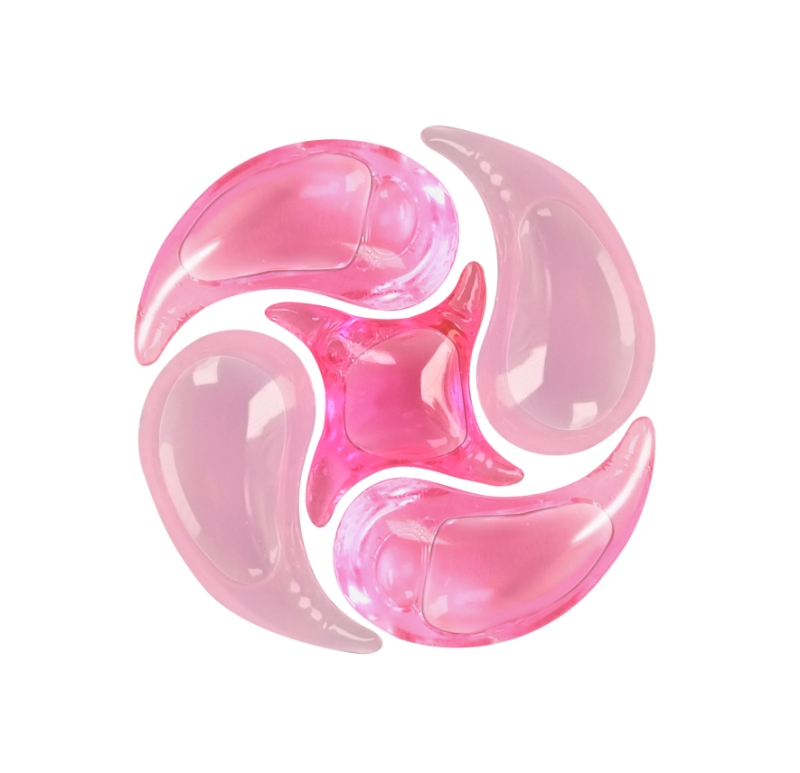
We went through dozens of prototype geometries before landing on a five-lobed core that distributes stress evenly. Each iteration got tested on a shaker table and in a standard machine cycle under low, medium, and high soil loads. Only when a pod passed all three without residue or premature leakage did it make it to the next round.
Synchronized Dosing for Five Separate Formulas
Now you can prepare five different formulas at the exact same time without juggling multiple machines or waiting for one to finish before starting the next. The synchronized dosing system coordinates each formula's water-to-powder ratio, temperature, and dispensing speed so all five bottles are ready together. This turns a typically chaotic feeding prep into a single, predictable routine.
Each of the five formula compartments operates independently but works off a shared timer and sensor array. You set the target volume and mixing strength for each formula slot, and the machine calculates the optimal start sequence. Instead of one formula being ready early and sitting on the counter while the others catch up, the system staggers the initial heating and mixing phases, then triggers the final dispense in a near-simultaneous release. The result is five fresh, properly mixed bottles that are ready within seconds of each other — not five minutes apart.
For parents who rely on precise calorie counts or specialized formulas, the synchronized dosing also reduces cross-contamination risk. Each pathway is sealed and rinsed after every cycle, and the machine tracks each formula's usage history separately. You don't have to remember which bottle got which formula or double-check measurements because the system logs every dispense and can alert you if one compartment runs low or needs a refill.
Sealing Strength That Survives Shipping and Storage
A lid that holds tight isn't just a feature; it's the difference between a product arriving intact and one that leaks during transit. We test our seals under vibration, pressure shifts, and temperature swings that mimic real shipping conditions, so the closure stays put from warehouse to doorstep.
Storage throws its own challenges at packaging—stacked weight, humidity, and long idle periods. The sealing material resists compression set and keeps its grip even after months on a shelf, preventing air and moisture from creeping in. That means no surprises when the container is finally opened.
Rather than relying on a single gasket design, we tune the seal geometry to the product and container material. The result is a closure that withstands rough handling and quiet storage alike, holding its integrity without needing extra tape or film.
Inline Inspection Systems With Zero Tolerance for Defects
Every unit passes under high-resolution cameras and laser profilers before it can move to the next station. The system flags anything outside the tolerance window—micro-cracks, voids, surface contamination—and triggers an automatic reject mechanism. There is no sampling plan here; one hundred percent of production is checked.
Unlike offline audits that let a bad batch reach packaging, these inline systems work at full line speed. Algorithms compare each part against a digital twin of the approved master, using multiple lighting angles to expose defects that a single image would miss. When a threshold is breached, the line stops or diverts the part, depending on the configured failure mode.
The zero-tolerance philosophy also shapes how operators interact with the equipment. Alarm logs are reviewed daily, and any repeated rejection pattern triggers an immediate adjustment to the upstream process, not a loosening of the inspection criteria. This keeps the standard fixed while the process adapts.
Quality Gates from Raw Materials to Finished Packs
Raw materials don’t move until they’ve cleared the first gate. A sample from every delivery goes to the lab for identity, assay, moisture, and particle size testing. If a batch falls outside the approved specification, it’s quarantined and flagged for supplier review before any production planning begins.
On the line, in-process checks run at scheduled intervals rather than waiting for end-of-shift reports. Operators measure fill weights, seal strength, and cap torque against the batch record. Many lines now use automatic feedback to adjust dosing or temperature the moment a trend starts drifting from centerline.
Finished packs face final release gates before leaving the site. This includes a 100% check for metal contamination, a visual inspection for label alignment and pack integrity, and a retained sample pull for each lot. Only after every gate is signed off does the batch get released to distribution.
Stability Testing Under Real Washing Conditions
Most accelerated tests fall short because they ignore how real washing machines actually treat fabrics. The agitation pattern in a front-loader differs enormously from a top-loader with a central agitator, and even water hardness or detergent chemistry can shift results. For a meaningful stability assessment, the sample needs to experience multiple full cycles using a standard household detergent at the typical dose, not a lab-grade surfactant solution. Only then do issues like gradual dye migration, seam slippage, or loss of water repellency become visible in a way that matches consumer experience.
Temperature is only one part of the story. Real washing introduces mechanical stress that cannot be replicated by simple soaking or tumbling in clean water. A garment rubs against itself, against other items, and against the drum perforations. Over time, this abrasion can break down finishes, create micro-tears in laminated layers, or cause coatings to peel. Including a mixed load, such as towels or denim, during testing is a practical way to mimic realistic friction without relying on artificial abrasion machines that never quite match the randomness of a home wash cycle.
Drying also belongs in the loop. Line drying, tumble drying on low heat, or even flat drying can alter the long-term stability of prints, elastics, and bonded seams. A product that survives five washes might fail at ten if the drying method is ignored. Recording observations at intervals—after 5, 10, and 20 cycles—gives a clearer picture of when degradation begins. Photos under consistent lighting and notes on dimension change, color fastness, and handle feel are more useful than a single pass/fail score, because real-world users rarely notice a slow decline until it becomes obvious.
FAQ
It's a production facility specialized in making detergent pods with five separate compartments, each holding a distinct liquid or powder formula that stays stable until it dissolves in the wash.
The separate chambers prevent active ingredients from interacting prematurely, so enzymes, brighteners, and stain removers can be released at the optimal time during the wash cycle for better cleaning results.
The line typically uses high-speed precision filling, automated chamber sealing, vision inspection systems, and robotic handling to maintain accurate dosing and reduce human error.
Every batch undergoes weight checks, seal integrity tests, and dissolution trials. Cameras scan each pod for defects like leaks or uneven chamber volumes, and any faulty unit is automatically rejected.
If a seal fails, the liquids can mix inside the package or leak out, causing reduced cleaning power, unstable product, or damage to packaging during storage and transport.
Yes, the separate chambers allow formulators to adjust the formula in each compartment independently, making it easier to tailor products for hard water, cold water, or specific fabric care needs.
The factory uses closed-loop systems for chemical handling, automated pH and viscosity monitoring, and strict hygiene protocols to prevent contamination and protect workers.
Advanced servo-driven filling nozzles and in-line checkweighers measure each pod at multiple points; any deviation outside a tight tolerance triggers a reject mechanism before packaging.
Conclusion
Designing a five-chamber pod forces engineers to rethink how separate cleaning formulas can coexist in one water-soluble film without mixing prematurely. Each chamber has a different viscosity, density, and chemical profile, so the fill sequence must be timed to prevent cross-contamination while keeping individual weights within tight limits. The dosing system relies on synchronized nozzles that dispense all five formulas in a single production cycle, with real-time pressure and flow corrections to handle viscosity shifts from temperature or batch changes. This level of coordination means a pod can hold a stain remover, brightener, fabric softener, fragrance, and enzyme booster in isolated compartments, all dissolving in the wash at the intended moment.
Once the chambers are filled, the film must be sealed strongly enough to survive overseas shipping, warehouse stacking, and repeated handling without bursting or leaking. Vibration tables, drop tests from set heights, and humidity chambers expose pods to conditions far harsher than a retail shelf. Inline inspection systems then check every pod at high speed, using high-resolution cameras and laser sensors to verify film alignment, chamber fill levels, and weld seam continuity. Any unit outside tolerance is automatically rejected before packing. Raw materials face strict incoming tests for film solubility, tensile strength, and chemical purity, while finished packs pass through multiple gates for weight, visual defects, and seal integrity. Finally, pods enter a washing simulation lab where they are tested in hard water, low-temperature cycles, and short or heavy loads. The results confirm that all five chambers dissolve in the correct order and leave no residue, ensuring consistent performance in real machines.
Contact Us
Contact Person: Zhao Yanlong
Email: [email protected]
Tel/WhatsApp: 8615832007309
Website: https://www.gzlanjieya.com