
Best Brake Caster Wheels Supplier Criteria for Durable Mobility Solutions
2026-09-23
Choosing the right brake caster wheels supplier isn't just about comparing prices—it's about avoiding the hidden costs of failed locks, cracked treads, and carts that drift when they should stay put. Durable mobility solutions demand more than a generic hardware catalog. This guide walks through the practical criteria to separate dependable suppliers from the rest. And if you're aiming to skip the trial-and-error phase, CMCL has already built its reputation around those exact standards.
What Separates a Reliable Brake Caster Wheel Supplier From the Rest?
Reliability in a brake caster wheel supplier rarely comes down to a single spec sheet. It shows up when the braking mechanism holds torque after hundreds of cycles, when the wheel compound doesn’t flat-spot under a parked load, and when the mounting plate dimensions stay within tolerance batch after batch. A supplier worth keeping does its own fatigue testing on brake springs and locks, not just relying on the factory’s word. They’ll also ask about your floor condition, load distribution, and push/pull speed before recommending anything—because they know a brake that works on epoxy-coated concrete may chatter on steel grating.
Another dividing line is traceability. The best suppliers keep records of raw material heats and batch-level test results, so if a brake lever ever shears or a tread delaminates, you’re not guessing which production run is affected. They also stock replacement parts like brake pads, springs, and cam assemblies instead of forcing you to replace the whole caster. That might seem minor, but it’s the difference between a ten-minute fix and a week of downtime.
Finally, look at how they handle custom requests. A reliable partner will prototype a modified brake geometry or a different wheel durometer and send you samples with the actual torque values written on the tag. They won’t just say “it’s rated for 900 lbs” without explaining whether that’s dynamic, static, or impact load. If their answer changes based on who you talk to, keep looking.
The Material and Build Quality Signals That Predict Long-Term Performance
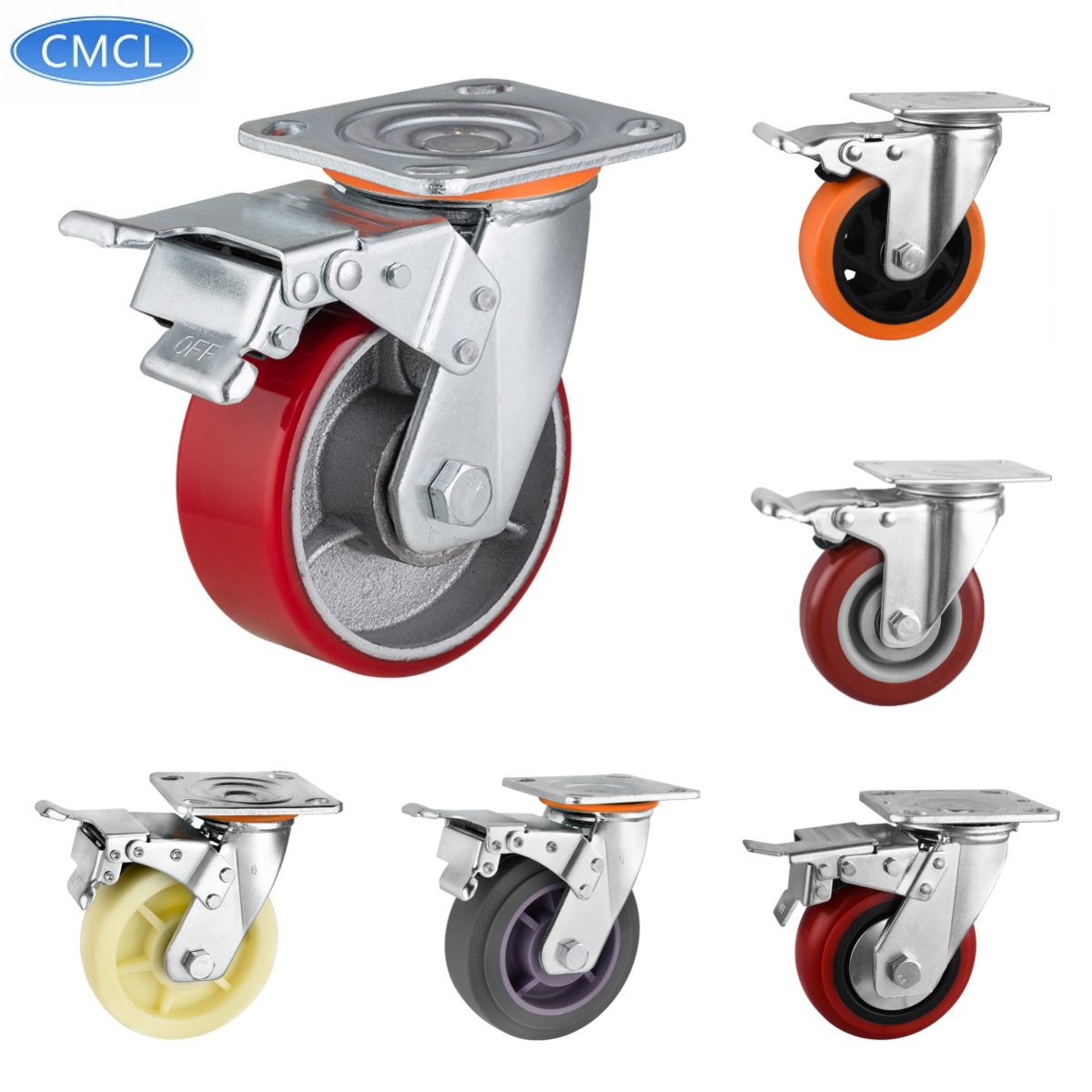
When you hold a product in your hands, its long-term reliability often reveals itself through subtle physical cues. Weight distribution acts as an unspoken promise: a well-balanced item rarely has hidden weak points, while uneven heft suggests rushed assembly or internal compromises. Seam alignment and joint tolerances tell a similar story—tight, consistent gaps signal precision manufacturing, whereas irregular spacing hints at material fatigue waiting to happen. Even the texture of surfaces matters; a uniform finish without micro-pitting or waviness indicates controlled production environments, not just cosmetic care.
Material choice plays a more direct role than most consumers realize. Dense, non-porous substrates resist moisture ingress and thermal expansion, two primary drivers of gradual failure. Metals with uniform grain structure—visible through subtle surface reflections—tend to resist stress cracking better than those with visible inclusions or casting lines. Polymers that spring back without whitening under pressure demonstrate proper cross-linking, a hallmark of durability. Meanwhile, the absence of cheap filler materials is often detectable by sound: a solid, low-frequency resonance when tapped suggests molecular consistency, unlike the hollow plastic clack of shortcuts.
Build quality evaluation goes beyond visible inspection. Fasteners that seat flush without over-torquing indicate calibrated assembly lines and thread integrity. Moving parts should exhibit consistent resistance across their full range—no dead zones or sudden looseness—which predicts mechanical longevity. Even packaging density offers clues: components that arrive tightly nested with minimal free movement suffer less micro-abrasion in transit, preserving their factory tolerances. Over time, these minor details compound, separating products that age gracefully from those that crumble after the warranty expires.
Brake Systems That Actually Hold Up Under Heavy Loads
Most stock brake setups start to sweat when you're hauling a trailer or descending a long grade with a full bed. The first sign is usually a soft pedal and that acrid, overheated smell. If you want brakes that survive repeated heavy stops, you need to look past the marketing and focus on three things: pad compound, rotor mass, and fluid that won't boil. A semi-metallic pad with a high metal content can bite harder when hot, but it will chew rotors faster. Ceramic pads run quieter and cleaner, yet they often lose bite at the exact moment you need them most. Matching the pad to the actual load is half the battle.
Rotors play a bigger role than most drivers realize. Thicker, vented rotors shed heat faster, and drilled or slotted faces help gases escape when the pad gets hot enough to outgas. But cheap drilled rotors crack around the holes under extreme thermal cycling. For heavy loads, a plain or slotted rotor made from high-carbon iron usually holds up better than a blingy cross-drilled one. Also, don't ignore the caliper. A fixed multi-piston caliper squeezes more evenly than a floating single-piston design, reducing uneven pad wear and hot spots that warp rotors over time.
Fluid is often the weak link. DOT 3 and DOT 4 fluids absorb moisture, and once water content climbs, the boiling point drops hard. That leads to a mushy pedal right when descending a mountain pass. Flush the fluid every year or two, and consider a high-temp DOT 5.1 or a quality DOT 4 with a dry boiling point above 500°F. Stainless braided lines also remove the ballooning feel of old rubber hoses, keeping pedal travel consistent. Put all of this together—pads, rotors, calipers, fluid, and lines—and you get a brake system that doesn't just survive heavy loads, it stays predictable and strong run after run.
How to Gauge Real-World Durability Without Guesswork
Instead of relying on advertised lifespans, start by examining the materials and construction details that fail first. Look for stress points like seams, zippers, or moving parts, and ask whether they're reinforced or easily replaceable. A product built with serviceable components often tells you more than any marketing claim.
Pay attention to how the item behaves under real use conditions, not just in a lab. That means checking if it warps in heat, stiffens in cold, or picks up scratches from daily contact. Hands-on reviews, long-term user forums, and even rental or refurbished listings can reveal patterns that spec sheets miss.
Finally, consider the repair ecosystem. If spare parts are readily available and instructions exist for common fixes, the product is designed to last beyond its original sale. The absence of that support, on the other hand, often predicts a short functional life regardless of initial build quality.
Customization Options That Go Beyond Standard Catalog Picks
Most catalogs stop at a handful of finishes and sizes, but real customization starts where the spec sheet ends. You might need a worktable that fits an awkward corner, a chair built for a taller frame, or a lamp with a switch placed exactly where your hand naturally falls. These aren't afterthoughts—they're the details that make an object feel like it was made for you rather than assigned to you.
Working directly with the people who build the piece changes the conversation. Instead of ticking boxes on an order form, you can discuss how a particular wood grain will look under your kitchen lights, or whether a powder-coated steel base will hold up to daily use in a busy entryway. Small adjustments—an extra inch of legroom, a hidden cable channel, a rounded edge instead of a sharp corner—aren't always listed as options, but they're often possible when you ask.
The value of going beyond standard picks isn't just about getting something unique; it's about solving problems that mass production ignores. A desk with a built-in slot for your tablet, shelving that matches the exact height of your books, or a fabric that won't pill under constant use—these choices come from understanding how you live, not from a dropdown menu. That kind of attention turns a purchase into a piece of your space.
Warranty, Support, and the Quiet Signs of Supplier Confidence
A warranty is rarely just a piece of paper. When a supplier extends coverage beyond the standard twelve months without being asked, it often says more about their internal quality data than any sales pitch could. They have run the failure rates, looked at the return patterns, and decided they can afford to stand behind the product longer. That quiet arithmetic is worth paying attention to.
Support tells a similar story. A vendor that offers direct access to engineers rather than routing every issue through a ticket queue is signaling something about how they view their own product. They expect it to work well enough that their technical staff won't be overwhelmed. Conversely, a supplier that hides behind automated responses and long turnaround times may be revealing their own doubts about reliability.
None of this is advertised in a datasheet, but it shows up in the details: the wording of the warranty exclusions, the availability of replacement parts, the tone of the support documentation. Those quiet signs often predict long-term performance better than any checklist of features.
FAQ
Look for a forged steel or ductile iron top plate, a thick polyurethane tread that resists chunking, and a brake that locks both the wheel and swivel. A supplier who reveals their torque test numbers is usually more trustworthy than one who hides them.
Ask for cycle test data instead of marketing claims. A brake that survives 50,000+ engagement cycles without losing pad pressure or developing play is a good sign. Also check if replacement brake shoes are available as a standalone part.
Yes, a soft but tough tread like solid polyurethane in the 75-85 Shore A range absorbs shocks well, while a reinforced swivel race prevents wobble. Avoid hard nylon or phenolic on rough surfaces because they transmit vibration and wear quickly.
The better suppliers will offer tread compounds that leave no marks and resist chemical degradation. They should also provide documentation on particle emission and outgassing if you ask. If they only push stock options, that's a limitation.
Vague answers about brake pad material, no load rating printed on the wheel, or a total brake that uses a flimsy stamped lever are warning signs. Also be wary of suppliers who can't give you a clear policy on warranty claims for brake failure.
In high cycle environments, a quick monthly check of brake engagement and wheel tread wear is practical. Replace any caster where the brake no longer holds a fully loaded cart on a 5 degree incline, regardless of age.
For carts that must stay absolutely still during procedures, yes. A dual brake locks both wheel rotation and swivel, so the cart won't drift or rotate. Single wheel brakes work for basic storage carts but can still allow pivoting motion.
With proper load limits and floor conditions, expect three to five years for the wheel tread and brake pads in a busy facility. If a supplier promises ten years without giving you the load and cycle assumptions behind that number, treat it as sales talk.
Conclusion
Finding a brake caster wheel supplier that actually delivers durable mobility isn't just about sorting through a catalog. The reliable ones stand out by how transparently they talk about material choices and failure points. You want to see specifics: forged steel forks rather than stamped plate, polyurethane treads with a Shore hardness matched to your floor conditions, and sealed bearings that don't need constant re-greasing. Brake design matters even more under heavy loads. A good supplier will show you how their brake mechanism holds on a 5-degree incline with a fully loaded cart, not just on a flat showroom floor. Ask for test footage or data from repeated engagement cycles—real durability shows up in the small details like brake pad wear after 10,000 stops, not in glossy spec sheets.
Beyond the hardware, the best suppliers treat customization as a problem-solving exercise rather than an upsell. They'll adjust bolt patterns, mount heights, or add thread guards for dusty or wet environments without treating you like an inconvenience. Warranty terms tell you a lot too: a supplier that covers casters for five years and replaces brake components without making you fill out endless forms has probably seen their products survive rough conditions. Quiet signs of confidence include offering to visit your facility, sharing failure rate data from similar operations, and providing engineering support before you even place an order. That kind of supplier is the one you can trust when a caster failure means a halted production line, not just a squeaky cart.
Contact Us
Contact Person: Ruby
Email: [email protected]
Tel/WhatsApp: +86 13360379367
Website: https://www.cmcl-casters.com