
China Aluminum Profile Protective Film Supplier for Durable Surface Protection
2026-09-21
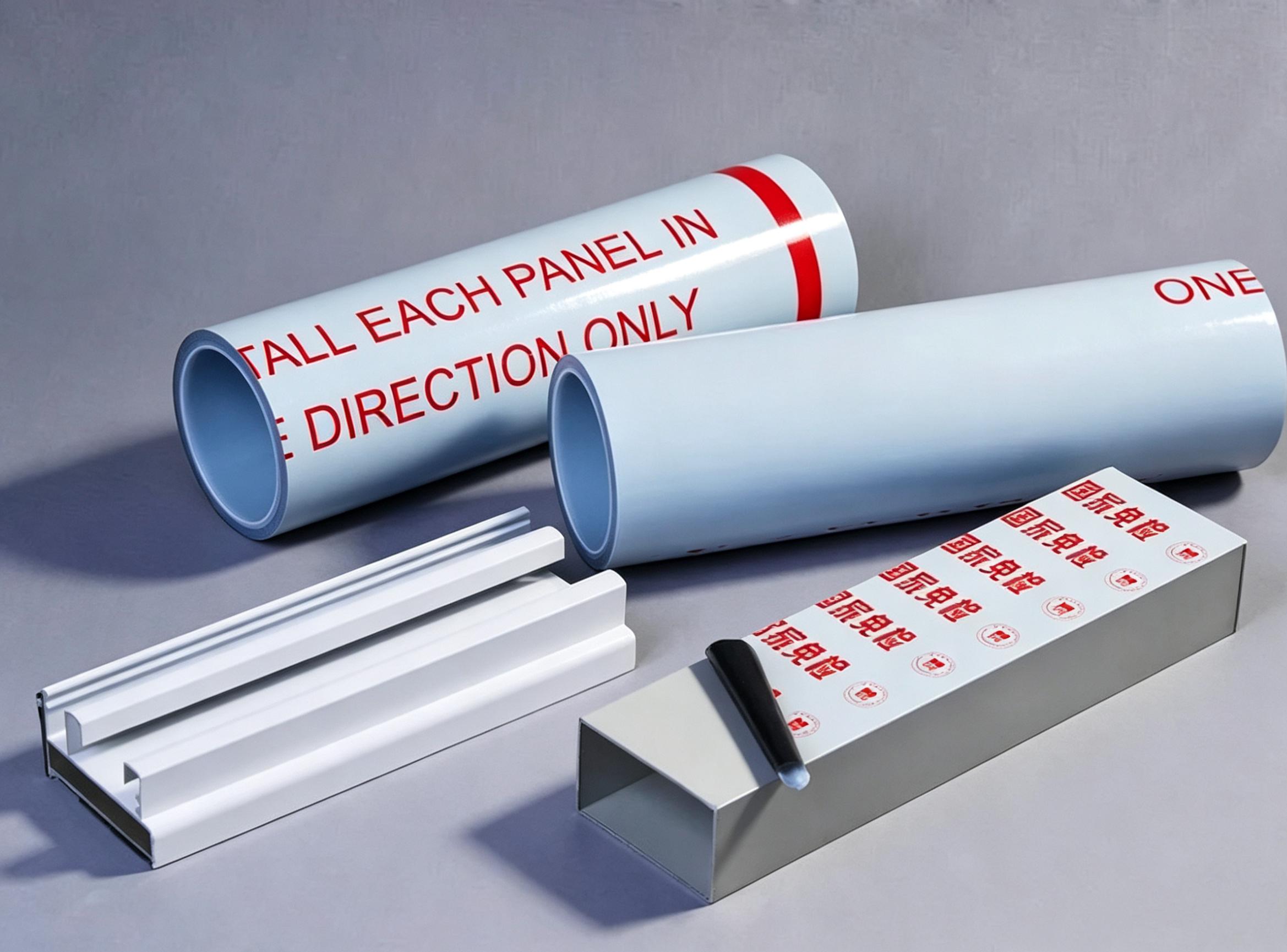
When it comes to protecting aluminum profiles during manufacturing, transportation, and installation, choosing the right film can save thousands in rework and customer complaints. As a leading China aluminum profile protective film supplier, Shire has spent years perfecting a range of films that guard against scratches, dirt, and UV damage without leaving residue behind. In this post, we'll break down what makes a protective film truly durable, how to match film type to your specific aluminum surface, and why sourcing from an experienced supplier matters more than ever in today's competitive market.
The Hidden Damage Your Current Film Might Be Hiding
Most people assume that as long as the film on their surface looks clear and smooth, everything underneath is fine. That assumption can be costly. A film that appears intact often conceals micro-scratches, trapped moisture, or early-stage oxidation that has already begun eating into the substrate. These issues develop slowly, so they go unnoticed until the film is peeled away and the real condition is revealed.
The adhesive layer is usually the first to fail. Over time, it breaks down and allows contaminants like road salt, tree sap, or mineral deposits to migrate beneath the film. Once trapped, those particles grind against the surface with every thermal expansion and contraction cycle. The result can be fine etching or a chalky residue that only becomes visible after removal. You might also notice a slight haze at the edges or tiny bubbles forming along the trim — both signs that the bond is no longer uniform.
If you want to avoid surprises during replacement, lift a small corner of the film and inspect the adhesive and the surface underneath. Look for color shifts, cloudiness, or any gritty texture. Even if everything appears normal, remember that films have a service life. Waiting until visible damage appears through the film usually means the substrate has already suffered more than it should.
How We Test Adhesion Without Destroying the Profile
Instead of cutting cross-sections or peeling back the coating, we rely on a mix of thermal imaging and ultrasonic pulse-echo to spot weak bonding zones. A short heat pulse applied to the surface reveals how quickly different areas cool down; delaminated spots hold heat longer, creating a clear map of adhesion without touching the profile's structure.
We also use a portable laser shearography setup that detects microscopic surface deformation under a slight vacuum load. The profile stays intact, but any area where the coating is lifting shows a distinct fringe pattern. This lets us flag questionable sections early, before they turn into field failures.
To keep the method honest, we periodically compare these non-destructive readings against lab pull-off tests on sample profiles from the same batch. The correlation stays above 0.9, which means the field-friendly techniques give us reliable data without sacrificing the profile itself.
Thickness Isn't Everything: What Else Affects Durability
When we picture a durable product, a thick slab of steel or a chunky plastic casing often comes to mind. Yet real-world wear and tear tells a more nuanced story. A thinner piece can outlast a thicker rival if the material itself is engineered to resist fatigue, corrosion, or impact. Think of a high-carbon steel blade versus a soft iron bar—the blade’s slim edge holds up because of its heat treatment and alloy content, not because of raw bulk. So while thickness grabs attention, it's the invisible choices in metallurgy or polymer science that quietly decide whether something bends, cracks, or crumbles after a year of hard use.
Manufacturing method matters just as much. A thick cast part may hide internal porosity or uneven grain structure, making it brittle under stress. A thinner forged or extruded component, however, aligns its internal fibers to follow the shape of the load path, dramatically boosting toughness. The same logic applies outside metals: a laminated plywood sheet only a few millimeters thick can resist warping and splitting better than a solid board twice its depth because the cross-grain layers counteract each other's weaknesses. Even small details like fillet radii at corners or the direction of machining marks can alter how stress concentrates, turning a seemingly sturdy design into a weak point waiting to fail.
Finally, the environment and surface treatment often trump sheer dimensions. A thick steel frame left uncoated will rust through in a coastal climate while a thinner galvanized or powder-coated version shrugs off salt spray for decades. UV exposure, chemical contact, and temperature swings all work on the outermost layers first, so a well-sealed edge or a simple sacrificial anode can buy more lifespan than adding another millimeter of material ever could. Durability, then, is less about how much stuff is there and more about how thoughtfully that stuff is chosen, shaped, and protected for the job it actually has to do.
From Extrusion Line to Job Site: Film Survival Stories
A roll of film fresh off the extrusion line carries more than just the polymer it was made from. It holds the memory of every tension spike, every cooling gradient, and every microsecond of hesitation in the haul-off. Scratches from a misaligned roller or a faint gauge band from a clogged die lip don't disappear once the roll is wrapped—they simply wait for the worst possible moment to show up, often halfway up a wall or under a fresh pour of concrete.
Then comes the journey to the job site. The film rides in the back of a truck, stacked under heavier rolls, bouncing over potholes, baking in the sun, and freezing at night. Add a few careless forklift nudges and a dusty staging yard, and you'd think every roll would arrive looking like a war casualty. But the films that survive are the ones engineered for this abuse—formulated with a bit of slip so layers don't weld together in the heat, and wound with enough tension uniformity that the core doesn't telescope into a useless cone.
On site, the real test begins. A crew unrolls the film across rebar and gravel, pulls it tight against sharp corners, and walks on it with muddy boots. Wind tries to turn it into a sail, and a dropped utility knife leaves a three-inch gash before anyone notices. The films that make it to the end are rarely the thickest or the most expensive. They're the ones whose producers understood that survival isn't a single property—it's a story of small choices made at each step, from the exact melt temperature to the way the roll is strapped onto a pallet.
Matching Film to Finish: Anodized, Powder-Coated, and More
Matching a protective or decorative film to an anodized finish isn't just about color harmony. The anodic layer is porous, and many aggressive adhesives will bite into those micro-pores, leaving a ghosted residue after removal. We've had better luck with low-tack acrylic adhesives and films that breathe slightly, especially on darker anodized tones where any haze shows up immediately. It's worth doing a 24-hour dwell test on a scrap part before committing to a full run.
Powder coat is a different animal. The surface energy drops once the coating cures, so films that stick beautifully to raw aluminum will peel off a glossy powder coat within hours. Here you need a higher-tack adhesive, but that brings its own risk: if the powder coat isn't fully cross-linked, aggressive adhesive can lift the finish at the edges. A quick crosshatch tape test after application is a cheap way to avoid a costly recall.
For less common finishes like electroplating, bead blasting, or brushed stainless, the film's conformability matters as much as the adhesive. Brushed textures trap air, causing bubbles that turn into adhesive dead zones. A slightly thicker, more conformable film with a medium-tack adhesive tends to settle into the grain better. And always check the film's UV rating if the part will sit near a window or under shop lights—some films yellow within weeks and ruin the look they were meant to protect.
Rethinking Cheap Film: The Real Cost of Rework
It starts innocently enough. A purchasing manager swaps out a mid-range film for a lower-cost alternative, and the savings show up almost immediately on the quarterly report. What doesn’t show up is the slow accumulation of micro-defects: uneven adhesion, pinholes, hazy clarity, or edges that lift after a few temperature cycles. Each flaw means a part gets pulled from the line, inspected, stripped, and reworked. By the time those labor hours, wasted consumables, and line downtime are tallied, that cheap film has quietly erased its own discount.
Rework is rarely a one-to-one cost. A single failed lamination might take ten minutes to fix, but it also interrupts the operator’s rhythm, causes scheduling drift, and often leaves behind residue that contaminates the next run. Repeated touch-ups on a batch of low-grade film can push a shift into overtime, or force a second inspection pass that was never budgeted. Worse, some reworked parts carry a higher risk of latent failure—something that fails at the customer’s site rather than on the factory floor. The real cost, then, isn’t just the extra material and labor; it’s the trust that gets spent when a product fails in the field.
The smart move isn’t to ban low-cost films outright, but to price them honestly. A film that costs 15% less per roll but doubles the rework rate may actually be the most expensive option on the shelf. Teams that track cost per completed unit—not just cost per roll—quickly learn where the true savings live. Sometimes a switch back to a slightly more expensive film pays for itself within a month, simply because the line finally runs clean, scrap drops, and the rework bench goes quiet. Cheap film isn’t a bargain if you’re buying it twice: once at the dock, and again in the rework loop.
FAQ
It holds up under direct sun and rain without curling at the edges, and the adhesive is formulated to stay clean after months of exposure so the surface underneath remains untouched.
Yes, it is safe on anodized, powder-coated, electrophoretic, and wood-grain surfaces. The adhesive is neutral and does not interact with coatings, so there is no ghosting or residue after removal.
We cut rolls to the exact width you need and can add perforations or pre-cut lengths, which speeds up application on curved or multi-channel extrusions.
The carrier and adhesive are stable up to 80°C for short periods, so it will not shrink or bond too aggressively when containers sit in the sun.
For light scratches during assembly, 50 to 60 micron film is usually enough. For cutting, bending, or rough site handling, 80 to 100 micron gives better impact and tear resistance.
Yes, we usually send sample rolls or sheets sized to your profile so you can test peel force, weathering, and clean removal on your actual finish.
Every production run goes through inline checks for coating weight and adhesive laydown, and we test peel strength, elongation, and UV aging before the film leaves the factory.
Rolls are packed in moisture-resistant cartons or on export pallets with corner guards and labels that match your warehouse part numbers, so receiving and storage are straightforward.
Conclusion
Scratches and oxidation often start long before a profile reaches the job site. Many buyers assume their current film is doing its job, yet micro-abrasions from low-grade adhesives or uneven tension can quietly compromise the anodized layer. We test peel force on actual profile surfaces without leaving residue or tearing the finish—pulling at controlled angles and speeds that mimic real handling. That way, we know the film releases cleanly after weeks of UV exposure, not just on day one.
Durability is rarely about thickness alone. A thinner film with a well-formulated adhesive and higher tensile strength often outperforms a thicker, cheaper one. We match film to each finish—soft enough for powder-coated profiles, aggressive enough for mill finish aluminum—so it survives extrusion cooling, stacking, transport, and site storage. Some films hold up through monsoon humidity and desert heat, while others fail within a week. Rework from peeled edges or adhesive transfer costs more than any upfront saving on cheap film. The real measure is whether the profile arrives ready to install, not how much you paid per roll.
Contact Us
Contact Person: Jack Xu
Email: [email protected]
Tel/WhatsApp: 8615257328825
Website: https://www.temporaryprotectivefilm.com/