
China Shank Adapter Factory Supplies Premium Shank Adapters for Heavy-Duty Drilling Operations
2026-10-21
When sourcing from a China shank adapter factory, the big question isn’t volume—it’s whether the metallurgy and machining tolerances can survive heavy-duty drilling day after day. A shank adapter failure mid-hole costs far more than the part itself. That’s why PULANKA has built its reputation on premium shank adapters that hold up under extreme impact, with factory-direct consistency that generic suppliers can’t match.
Forged to Handle Constant Percussion
The repeated strike of a hammer against stone, chisel, or metal sends shockwaves through every part of the tool. Most cast heads develop micro fractures after weeks of this abuse. A forged head, however, starts as a single piece of steel that is heated and pressed until the grain flows into the exact shape of the striking face. That directional grain structure redirects impact energy along the length of the tool instead of letting it concentrate at sharp corners.
Constant percussion also tests the connection between the head and the handle. A forged eye, drawn and drifted rather than drilled, leaves no weak points around its circumference. The steel compresses during forging, increasing density just where the handle seats. This means the head stays tight on the handle even after thousands of full-force swings, without relying on epoxy or wedges that eventually loosen.
Hardness alone doesn't survive percussive work. A tool that's too hard chips at the edge; too soft and it deforms. The forging process allows a controlled differential heat treatment—harder at the striking surface, tougher in the neck and eye. That balance absorbs the shock of constant percussion, letting the tool flex at the molecular level and return to shape, impact after impact.
Why Heat Treatment Makes the Difference
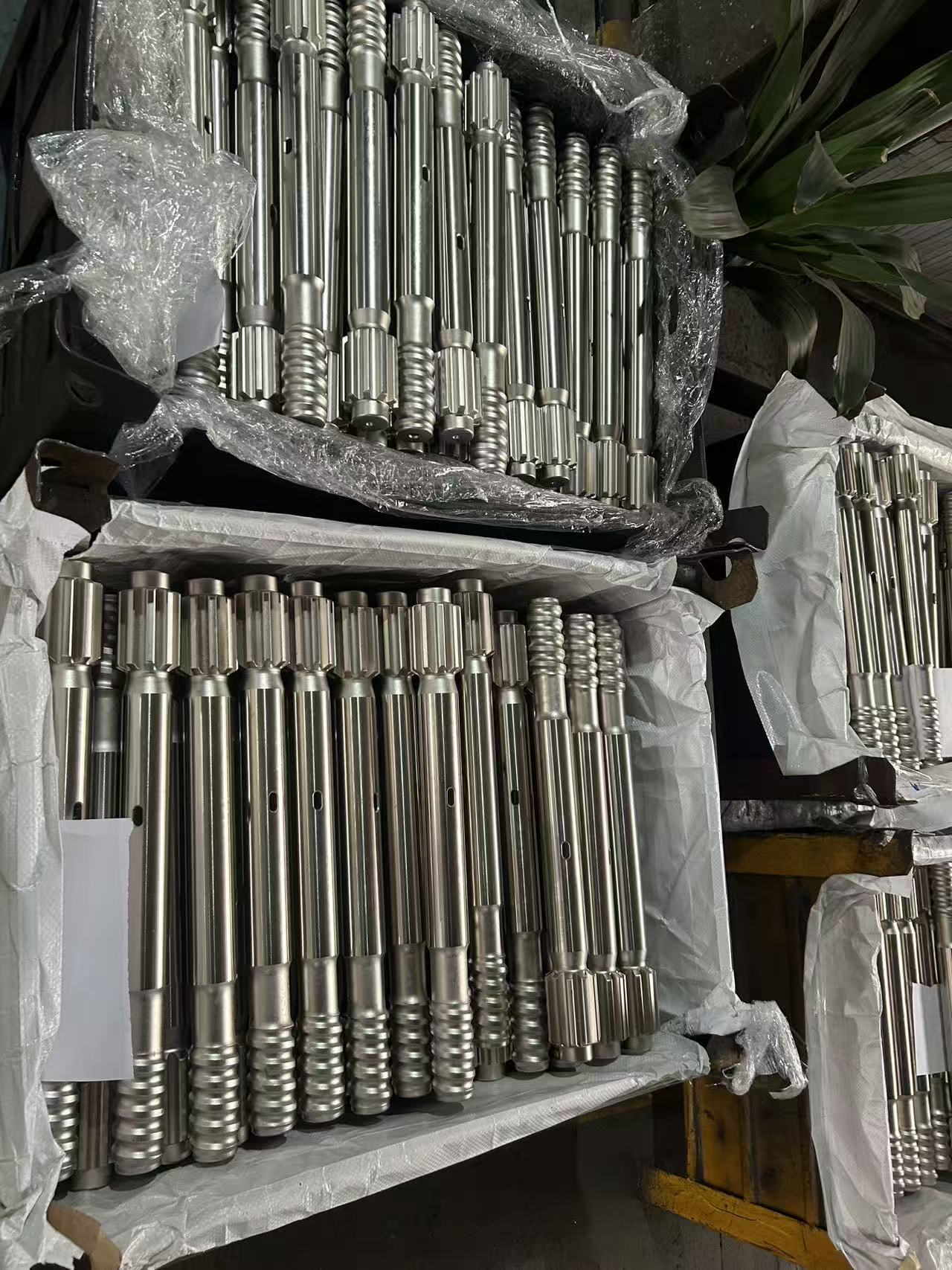
Heat treatment often gets overlooked because it happens behind the scenes, yet it quietly reshapes a material's inner structure in ways that raw processing never can. By cycling metal through carefully controlled heating and cooling, you're not just warming it up—you're rearranging grains, relieving internal stress, and unlocking mechanical properties that make the difference between a part that fails early and one that outlasts the machine it's built into.
What sets heat treatment apart is how precisely it can be tuned. A few degrees higher or a slightly faster quench can shift hardness, toughness, or ductility in measurable ways. This level of control means the same base alloy can serve radically different roles: one annealing cycle makes it soft enough to machine easily, while a subsequent hardening and tempering step turns it into a wear-resistant workhorse. That adaptability is why engineers keep coming back to it instead of chasing exotic new materials.
In practice, the difference shows up where it matters most—under load, in corrosive environments, or after millions of cycles. Heat-treated components resist deformation, shrug off fatigue, and maintain dimensional stability far longer than their untreated counterparts. It's not magic; it's metallurgy. But for anyone who has watched a properly treated gear outlast three untreated ones, the impact feels close enough.
Straight From Our Factory to Your Drill Rig
When we say straight from our factory, we mean it. The part that arrives on your rig isn't a copy of a copy or something that sat in a distributor's warehouse for eighteen months. It's built to your order, tested on the line, and crated the same week it leaves the floor. That cuts out the middlemen who add cost without adding anything to the part itself.
For drilling crews, the difference shows up in the small things—threads that engage cleanly, tolerances that don't need to be "made to work," and a serial number we can trace back to the exact batch of steel. When a rig is down, waiting on a part that was promised but never shipped is the real cost. We keep lead times short because we control the entire chain: machining, heat treatment, plating, and final inspection under one roof.
And because you're buying direct, the feedback loop is direct too. If something doesn't fit the way you expect or you need a modification for a specific ground condition, you talk to the people who actually made the part—not a call center. That's the whole point of cutting out the layers: fewer handoffs, fewer delays, fewer excuses.
Tolerances That Keep Your Operation Running
Getting tolerance right isn't about chasing perfect numbers on a spec sheet. It's about knowing where your equipment actually runs hot, where shafts flex under load, and where a few microns of clearance mean the difference between a smooth shift and an unplanned teardown. The best setups account for thermal growth before it happens, leaving just enough room for metal to move without inviting vibration or slop.
On the floor, you learn that tolerances interact. A bearing fit that feels snug on the bench can tighten up fast once the housing reaches operating temperature. That's why veteran machinists and maintenance teams lean toward functional tolerancing: specifying ranges that fit the duty cycle, not just the drawing. It keeps assemblies sealed, aligned, and quiet through long runs, while still allowing for practical teardown and reassembly.
The payoff shows up in fewer emergency stops and less guesswork during changeovers. When tolerances reflect how the machine truly behaves under stress, parts go together without forcing, seals last longer, and your operation keeps its rhythm.
What Happens When a Shank Adapter Fails Early
A shank adapter that quits before its expected service life doesn't just cost you a replacement part—it quietly disrupts the entire drilling cycle. When the adapter cracks or shears at the threads, the immediate symptom is usually a sudden loss of percussion energy transfer. The bit stops biting, penetration rates drop, and the operator often compensates by overfeeding or increasing impact pressure, which only accelerates wear on the remaining components like couplings and drill rods. In underground operations, that wasted hour can push a blast schedule off track without anyone noticing until it's too late.
Beyond the obvious downtime, early shank adapter failure creates a maintenance ripple that's easy to underestimate. The failed adapter often damages the front head of the rock drill or the first rod's thread, turning a simple swap into a multi-part repair. You end up with mismatched thread profiles on adjacent components, which leads to poor alignment, uneven load distribution, and a cycle of repeat failures that no amount of greasing can fix. This is how a single overlooked metallurgical flaw or improper heat treatment propagates into a fleet-wide reliability issue.
The most insidious part is that early failures rarely happen in isolation—they tend to cluster under specific operating conditions like high water pressure, abrasive rock, or frequent collaring. Once one adapter goes early, the rest of the string often follows within shifts because the sudden loss of alignment has already compromised the joints. Smart crews learn to treat an early shank adapter failure as a signal to inspect the entire drill string, not just replace the broken part and carry on.
Field-Proven in Hard Rock and Deep Holes
Down in the abrasive chaos of hard rock and the silent pressure of deep holes, tools don't get the benefit of the doubt. They earn their reputation one shift at a time. Our systems have spent years chewing through granite, basalt, and tightly compacted formations where lesser equipment stalls or shatters. The design wasn't born in a lab simulation—it was refined in the field, where vibration, heat, and unexpected fracture lines rewrite the rulebook daily.
What that means for your operation is simple: predictable performance when the ground turns ugly. The cutting structure, bearing arrangement, and sealing systems have all been redesigned based on real failure modes reported from deep drilling sites. Not theoretical limits. Operators who switch to this platform typically stop babying the tool. They push it harder, run it longer, and stop budgeting for unplanned trips out of the hole.
Deep holes introduce their own quiet menace—thermal cycling, hydrostatic pressure, and the slow grind of fine particulates working past every seal. Our field data shows consistent run times even below 5,000 meters, with wear patterns that suggest the tool could have gone further. That's the real test: not the spec sheet, but the decision to keep rotating instead of pulling out to check.
FAQ
They start with vacuum-degassed alloy steel, typically 42CrMo or 23CrNi3Mo, which is forged rather than simply turned from bar stock. That forging process aligns the grain structure and gives the adapter a much longer fatigue life under repeated percussion loads.
After machining, every batch goes through induction hardening on the spline and thread zones, followed by low-temperature tempering. Hardness is checked at multiple points and recorded, so soft spots that could cause early stripping are caught before shipping.
Yes, clients often send old adapters or detailed drawings, and the team reverse-engineers the profile. Small trial batches are produced first, and once the fit is confirmed on the customer's rig, larger quantities are scheduled.
They are commonly used in underground mining, quarrying, tunneling, and geothermal drilling. Operators in those fields usually run rigs around the clock, so the adapters need to handle continuous impact without cracking at the shoulder or thread root.
Most of the process, from forging to final grinding, is done in-house. That removes middlemen and gives the factory direct control over tolerances. Raw steel is bought in bulk from mills that supply the automotive and heavy equipment sectors, which keeps unit costs down without switching to lower-grade alloys.
For standard sizes like T38, T45, or T51, production usually takes 15 to 20 working days after the deposit is received. Custom profiles with unusual splines or threads might need 30 to 45 working days, depending on tooling and the current order queue.
Yes, the factory offers phosphating, zinc plating, and shot peening. For underground mines with acidic water, a combination of shot peening and a rust-preventive coating is often recommended to reduce pitting and fretting on the contact surfaces.
Each adapter is measured with calibrated gauges for thread pitch, spline width, and overall length. A sample from every heat treatment batch also undergoes a tensile and impact test, and the mill certificate is kept on file for traceability back to the original steel heat.
Conclusion
A shank adapter earns its keep only when it survives the relentless hammering of a down-the-hole drill. That's why every premium adapter from this China factory starts as a single forged blank, not a welded assembly. Forging aligns the grain structure to absorb constant percussion without cracking at stress risers. Then comes the part most suppliers get wrong, heat treatment. A carefully controlled quench-and-temper cycle pushes surface hardness high enough to resist wear, while leaving the core tough enough to flex under impact. The result is an adapter that holds its shoulder and spline dimensions long after generic parts have mushroomed or snapped. Machining tolerances are held to a few thousandths of an inch, so the adapter seats squarely against the drill string. Misalignment is what kills threads and shanks early, and tight tolerances keep your operation drilling instead of tripping pipe.
Buying straight from the factory removes layers of markup and, more importantly, guesswork about what you're actually getting. Each batch is traceable to its heat lot, so if a shank adapter fails early, you're not left wondering whether the steel was subpar or the hardening was rushed. Early failure usually shows up as a snapped bit end or a sheared drive chuck, and it's almost always traced back to poor material or skipped post-forge normalizing. This factory's adapters are field-proven in hard rock and deep holes, from granite tunnels to water wells past 300 meters. Operators who switch report fewer rod changes and less downtime caused by stripped splines. In heavy-duty drilling, the shank adapter is the cheapest component to replace but the most expensive one to get wrong. Getting it right from the start keeps the whole string turning.
Contact Us
Contact Person: Elma
Email: [email protected]
Tel/WhatsApp: +86 13738628777
Website: https://www.pulankagroup.com/