
Custom Bag Hardware Essentials for Distinctive Designs
2026-10-27
Why do some bags stay in your mind long after they’ve left the shelf? The answer is often in the details you can touch—the weight of a zipper pull, the snap of a magnetic closure, the gleam of a custom logo plate. If you’re designing bags that should stand out rather than blend in, standard hardware won’t cut it. Here’s a look at the custom bag hardware essentials that turn good designs into unmistakable ones, with insights on how Kingming helps bring those details to life.
Hardware First Impressions: The Pieces That Define a Bag
The first thing I notice on any bag isn’t the leather or canvas—it’s the metal. Zippers that glide without a snag, a clasp that closes with a solid click, or a buckle that stays put under weight all tell you more about the bag’s intentions than any spec sheet. Cheap hardware feels hollow and light, often with sharp edges or a finish that rubs off after a week. Quality pieces, on the other hand, have a slight heft and a smooth, almost buttery movement. They’re the kind of details you catch yourself fidgeting with while waiting in line.
Buckles and rivets are where the real character shows. A well-made buckle won’t slip during a long walk, and it won’t chew through the strap over time. Rivets should sit flush, not catch on your clothes or scratch your phone. Even the sound matters: a dull clunk suggests something solid, while a tinny rattle is usually a warning. These small metal decisions shape how the bag feels in daily use far more than the fabric’s color or the logo placement.
Zipper Pulls and Sliders: Where Function Gets Personal
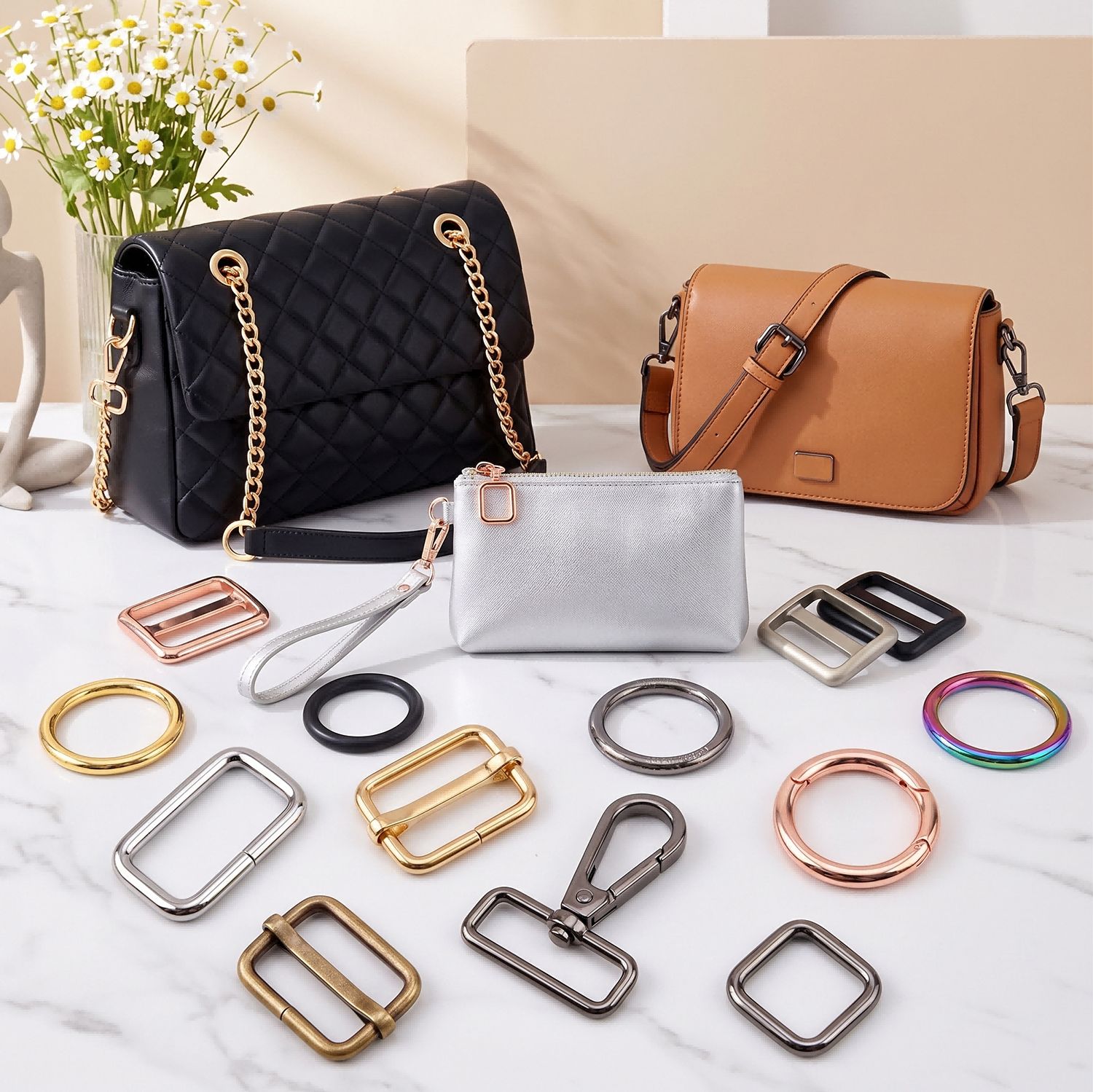
Most people never give a second thought to the small metal or plastic pieces that guide a zipper's teeth together. Yet those unassuming pulls and sliders handle more daily abuse than almost any other hardware on a jacket, bag, or pair of boots. When one breaks or becomes stiff, the entire item suddenly feels useless—no matter how well made the fabric or leather might be.
Choosing a replacement or upgrade isn't just about restoring function. A heavier brass pull adds tactile weight, while a rubber-coated tab offers grip in cold weather and a quieter jingle. Some makers shape pulls into tiny carabiners, cord knots, or engraved plates that carry initials or a favorite symbol. Swapping out standard hardware turns an ordinary zipper into a detail that reflects how the owner actually uses—and wants to feel—the object every day.
Buckles and Clasps That Carry the Design
A buckle rarely gets the attention it deserves. On a well-made bag or belt, the closure isn't an afterthought—it's the moment where the whole silhouette comes together. Designers often pick a shape or finish that repeats a curve found elsewhere in the piece: a rounded clasp might mirror a soft flap, while an angular buckle can sharpen an otherwise slouchy profile. That kind of visual rhyme is what makes a piece feel complete rather than simply assembled.
Texture matters just as much. Matte hardware tends to sit quietly against waxed canvas or pebbled leather, while polished or brushed metal draws the eye and sets a different tone. And weight plays a role too—too light feels flimsy, too heavy pulls at the strap and interrupts the drape. The best clasps are balanced enough to use without thinking, yet distinctive enough to be remembered long after the bag is put down.
Rivets and Eyelets: The Small Touches That Hold Everything Together
Rivets and eyelets rarely steal the spotlight, yet they quietly keep bags, belts, shoes, and even industrial gear from falling apart. A rivet is more than a metal pin — it's a permanent fastener that creates a strong point of connection between layers of material. Eyelets, on the other hand, are the reinforced holes that let laces, cords, or hooks pass through without tearing the fabric. Together, they handle the stress points that stitching alone can't manage.
Think about your favorite pair of jeans. The tiny copper rivets on the pocket corners aren't decorative afterthoughts; they were originally placed there because miners in the 1870s kept ripping their pockets. Today, that same principle applies to leather bags, canvas tents, and even paper tags. Eyelets do similar work for drawstrings on hoodies, shoe lace holes, and tarpaulin edges. Without them, those openings would fray and stretch until the whole item became unusable.
The real magic of these small touches lies in their material honesty. A well-set rivet feels smooth under your thumb, with no sharp edges or wobble. An eyelet should sit flush against the fabric, its rolled edge protecting the raw cut fibers. When they're done right, you don't notice them at all — and that's exactly the point. They hold everything together so discreetly that the bag, shoe, or jacket just works, season after season.
Magnetic Snaps and Turn Locks: Quiet Hardware, Loud Style
Magnetic snaps rarely announce themselves with a click. Instead, they pull two surfaces together with a subtle, almost organic finality—a soft thud that feels more like the bag closing itself than you closing it. This quiet action doesn't mean the hardware fades into the background. On a structured tote or a flap-front crossbody, the visible metal face of a magnetic snap can be shaped, brushed, or hammered to catch light in a way that draws the eye without making a sound.
Turn locks, on the other hand, demand a more deliberate motion: a half-twist, a satisfying resistance, then a clean release. The best turn locks have a weight to them—not heavy, but present. When the lock's face is oversized or finished in an unexpected tone like matte gunmetal or antique brass, it shifts from functional closure to focal point. Designers often pair a bold turn lock with an otherwise minimalist silhouette, letting the hardware be the only jewelry the piece needs.
What makes these closures feel modern is the contrast between their near-silent operation and their visual confidence. You don't hear a magnetic snap or a turn lock from across the room, but you notice them up close. That tension—quiet mechanism, loud design language—is what elevates a simple flap or pocket into something worth reaching for twice.
Chain Straps and D-Rings: Adding Motion and Attitude
Chain straps don’t just sit on a bag—they move with it. Each link shifts as you walk, catching light and throwing small flashes of texture that flat leather straps never manage. Add D-rings and the motion gets a hard edge: the metal turns, drags, and occasionally clinks against the ring, giving the bag a sound and rhythm of its own.
D-rings also set the chain at an angle instead of forcing it straight down. That off-axis drop makes the strap swing wider and fall with a slight twist. It’s a careless kind of precision, the sort of detail that reads as personal style rather than showroom placement.
Oversized rings, brushed links, or mixed finishes push it further. The hardware feels chosen, not polished out of character. And because it’s still functional, the attitude never becomes costume.
FAQ
Focus on finishes that have a slight texture or brushed quality rather than high-gloss chrome. Matte black, antique brass, and soft nickel tend to age more gracefully and pair well with a wider range of leather tones. Also consider how the finish reacts to oils from hands—high-polish surfaces show smudges quickly, which can make a bag look worn before its time.
Weight distribution matters more than total weight. Place magnetic snaps or turn locks close to the bag’s center of gravity, and avoid dangling chain straps unless the links are hollow or aluminum-based. For everyday totes, trade solid metal feet for reinforced leather corners—it cuts ounces without sacrificing structure.
A well-made zipper pull often does more than an expensive turn lock. Because hands touch it constantly, upgrading to a custom-shaped pull in a warm metal instantly changes how the bag feels. Even a simple leather tab with a small branded rivet can read as more intentional than a generic factory slider.
Yes—recycled brass and zinc alloys are increasingly common, and some suppliers now offer low-VOC plating. Look for hardware with a matte or tumbled finish, which hides minor surface imperfections and lets recycled metals shine without heavy polishing. Avoid shiny electroplated pieces if you want a lower-impact option, since they often require more chemical baths.
Skip over-embossed logos. A shallow laser engraving or debossed stamp on a flat surface like a rectangular buckle or a magnetic snap base reads as refined. Keep the mark small—under 12mm wide—and place it where the eye naturally lands, such as on a strap adjuster or the underside of a flap clasp, so it feels discovered rather than announced.
Yes, but tie them together with a third element. Use one tone as the dominant finish on structural pieces like zippers and D-rings, then use the other only on small accents like rivets or a single logo plate. A warm neutral leather or a fabric strap with subtle metallic threading can bridge the two tones so the mix looks deliberate.
Order samples and run them through a simple stress cycle: open and close the clasp 200 times, rub the finish with a cotton cloth dipped in mild soap, and leave a piece in direct sunlight for a week. If the plating shows wear at edges or the mechanism loosens, ask the supplier about their plating thickness—anything under 3 microns usually won’t survive daily use.
Look for hardware studios that offer low-minimum zinc die-casting or CNC machining runs of 100–300 pieces. Some suppliers allow you to modify an existing mold by adding your logo or changing a knob shape for a small setup fee. Another route is to buy blank hardware and work with a local engraver, which keeps upfront costs low while you test designs.
Conclusion
A bag rarely announces itself through its fabric alone. The first glance catches a flash of metal—a turn lock with a weighted, satisfying click, or a buckle sculpted with an almost architectural edge. These are the pieces that define a bag before a single seam is noticed. Custom hardware isn't an afterthought; it's the handshake. A zipper pull shaped like a truncated cone or a brushed slab of brass does more than open a compartment. It gives fingers something to remember. When the pull slides against the teeth with a muted, mechanical purr, the bag stops being a container and starts being a conversation.
The quieter elements carry just as much weight. Rivets and eyelets, often no larger than a coin, anchor stress points while catching light in unexpected ways. A magnetic snap, hidden behind a flap, delivers a soft, decisive closure that feels almost private. Then there are the pieces that move—chain straps with a dull gleam, D-rings that swing slightly as you walk, adding a rhythm to the design. The trick is balance: too much hardware turns a bag into armor, too little leaves it unfinished. Distinctive bags don't shout. They let a well-placed clasp, a custom slider, or a deliberately oversized buckle do the talking, one tactile detail at a time.
Contact Us
Contact Person: Jamie Zeng
Email: [email protected]
Tel/WhatsApp: +86 13728219269
Website: https://www.kmhardware.com