
Custom LED Headlight Bulb: What You Need to Know Before Buying
2026-09-19
Upgrading to custom LED headlight bulbs isn't just about brighter beams—it's about seeing the road on your terms, not the factory's. But before you click 'buy,' there's a maze of specs, fitment quirks, and legal gray areas that most sellers won't mention. Whether you're chasing a perfect cutoff or trying to avoid blinding oncoming traffic, getting it wrong costs more than a return shipping label. At LUXFIGHTER, we've seen too many drivers learn these lessons the hard way, so we're breaking down what actually matters before you commit.
What Makes Custom LED Headlight Bulbs Worth the Extra Effort?
The real payoff of going custom with LED headlight bulbs isn't just brighter light—it's getting a beam pattern that actually matches your housing and your driving habits. Off-the-shelf kits often scatter light or leave dark spots because they're designed for a generic reflector bowl. When you take the time to measure, shim, and align a custom setup, you end up with a cutoff line that doesn't blind oncoming traffic and still throws enough distance to spot a deer half a second earlier. That half second matters more than any lumen spec on a box.
There's also the matter of heat and longevity. A custom install lets you position the driver and any passive cooling fins where they actually get airflow, not just where they happen to fit. I've seen too many plug-and-play bulbs cook themselves inside sealed housings because no one thought about how the heat would escape. Spending an extra hour fabricating a small bracket or relocating a resistor might seem fussy, but it's the difference between a bulb that lasts three months and one that's still going strong three years later.
Finally, custom work lets you fine-tune the color temperature and intensity to match your eyes, not a marketing chart. Some people see better with a slightly warmer 5000K in wet conditions, while others want that crisp 6000K look. When you build the setup yourself, you can mix and match components, add a PWM dimmer for city driving, or angle the bulb slightly to widen the shoulder coverage. That level of control doesn't come from a one-size-fits-all product—it comes from treating your headlights like a project worth getting right.
Getting the Fit Right: Bulb Sizes and Base Types Explained
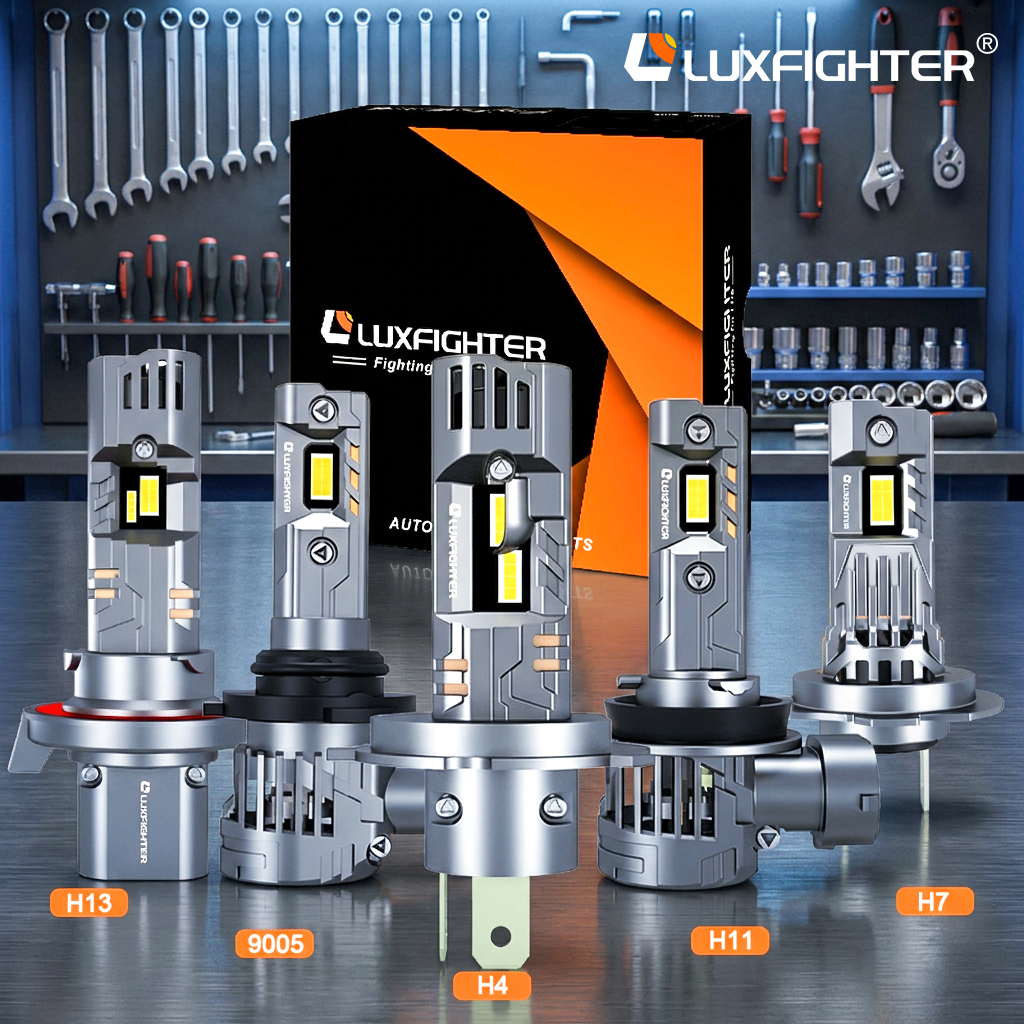
Most people grab a bulb by wattage and hope for the best, but the real headache starts when the new bulb won't even screw in. Bulb size and base type are the unsung gatekeepers of every lighting swap. The base is the metal part that makes electrical contact, and it comes in a handful of standard diameters. In North America, you'll most often meet the E26 medium base—the classic Edison screw that fits everything from table lamps to ceiling fixtures. But wander into a bathroom vanity or a chandelier, and you might find the smaller E12 candelabra base waiting to trip you up. Europe runs on E27 and E14, which are close but not interchangeable, a detail that has ruined more than one imported lamp.
The glass part—the bulb shape and its maximum diameter—gets coded with letters and numbers that feel like secret shorthand. An A19 is the iconic household bulb: A for arbitrary (or classic pear shape), and 19 for nineteen eighths of an inch in diameter. An A15 is slightly smaller, often used in ceiling fans, while a G25 globe bulb brings that round, vanity-mirror look. Then there are the specialty shapes: BR30 for recessed cans with a bulged reflector, PAR38 for outdoor floods that need a punch, and T8 or T12 for linear fluorescent tubes. Each shape is designed around where the light should go and how it sits in the fixture, so ignoring the code can leave you with a bulb that physically fits but throws light in all the wrong places.
The trap many fall into is treating compatibility as a suggestion. You can technically force an E26 bulb into some E27 sockets, but the voltage and thread pitch differences make it a fire risk over time. Similarly, a BR30 might screw into a recessed can made for a PAR30, but the beam angle and length will leave shadows or glare. Before you buy, turn the old bulb over and read the fine print stamped on the base or glass—usually two or three characters followed by a number. Match both the base letter-number and the shape code, not just one. And if the fixture is enclosed, check the bulb's maximum diameter against the shade or housing. A few minutes of measuring saves a return trip and keeps the wiring happy.
Lumens vs. Usable Light: Why Brightness Isn’t Everything
Raw lumen counts get thrown around like a badge of honor, but they rarely tell you how a light actually performs in a room. A fixture can pump out thousands of lumens yet leave a desk in shadow if the beam is too narrow or pointed at the wrong surface. What really matters is how those lumens land where you need them, without bouncing off walls as glare or disappearing into a dark corner.
Consider two lamps with identical lumen ratings. One uses a broad, unshielded bulb that scatters light in every direction, forcing your eyes to work harder against the harsh contrast. The other directs a softer, well-aimed glow onto the page or work surface. The second feels brighter and more comfortable even though the spec sheet says both are equal. That difference comes down to optics, placement, and beam shape, not just total output.
Color temperature and rendering play an underrated role too. A high-lumen cool white source can wash out details and make a space feel sterile, while a warmer, lower-lumen light with better color accuracy can reveal textures and depth far more effectively. So before chasing the biggest number, pay attention to where the light goes, how evenly it spreads, and whether it flatters the things you actually need to see.
Heat and Power: The Real Story Behind LED Lifespan
Many LED failures don't start with the diode itself—they begin in the driver and the thermal path. Running a chip beyond its rated current pushes junction temperature upward, and even a small rise cuts expected life by a noticeable margin. Thermal interface material, heatsink mass, and ambient airflow matter as much as the LED's printed lumen rating.
Constant-current drivers with poor regulation or undersized capacitors can introduce ripple that stresses the phosphor and solder joints. In enclosed fixtures, heat soaks into the PCB and accelerates solder fatigue. Selecting a driver with headroom and keeping the case temperature below the manufacturer's derating curve usually does more for longevity than chasing higher efficacy numbers.
Street Legal or Not? Navigating Local Headlight Laws
You might assume any headlight sold for your vehicle is automatically allowed on public roads, but local regulations often tell a different story. What's legal in one county can be a ticket waiting to happen just across the state line. Before you swap in a high-output LED kit or tint your lenses, check the specific vehicle code for your jurisdiction—some regions restrict colors, brightness levels, and even the type of bulb housing. A quick call to your local DMV or a certified inspection station can save you from a costly fix-it ticket and a failed safety inspection.
Beyond the basic on/off requirement, certain areas impose strict rules on auxiliary lighting, such as fog lamps, light bars, and underglow kits. For example, a light bar mounted above the bumper might be street legal only if it's covered while driving on public roads. Similarly, blue or red accent lights are often reserved for emergency vehicles, and even a faint glow can draw unwanted attention. Some municipalities also have specific rules about headlight height, aiming, and the use of high beams within city limits. Reading the fine print isn't just about avoiding fines—it's about not blinding oncoming traffic and keeping everyone safe.
Don't rely on online forums or a seller's claim that a product is "DOT approved." That stamp alone doesn't guarantee compliance with every local ordinance. Instead, look up the actual statute for your state or province, and when in doubt, consult a licensed mechanic who performs state inspections. If you travel frequently between regions, consider keeping a set of compliant bulbs and any required covers in your trunk. Understanding the patchwork of headlight laws may feel tedious, but it's a small effort that keeps your build both street legal and headache-free.
Installation Surprises: What Your Vehicle Might Throw at You
You’ve read the manual, watched the tutorial, and laid out every tool you own. Then reality hits: the mounting bracket holes don’t line up because your specific trim level has a slightly thicker dashboard lip. Or the factory wiring harness is tucked behind a steel brace that wasn’t mentioned in any forum post. These aren’t failures on your part—vehicles leave the assembly line with tiny variations that generic kits simply can’t predict.
Another classic surprise is the software side. You plug in the new module, fire up the configuration app, and it refuses to talk to your car because the ECU is running a dealer-only update from last month. Suddenly you’re downloading a patch from a third-party site, crossing your fingers that a previous owner’s aftermarket alarm system doesn’t interfere with the CAN bus. Even something as simple as replacing a head unit can turn into a scavenger hunt for a steering wheel control adapter that actually works with your year, make, and sub-model.
Don’t be shocked if the biggest obstacle is physical space. The enthusiastic online reviewer installed his dash cam wiring in ten minutes; your car has an airbag curtain routed right where he tucked his cable. You end up using a trim removal tool at an awkward angle, sweating over a plastic clip that creaks but won’t release. The lesson? Expect the unexpected—and give yourself double the time any guide suggests. It’s less about skill and more about patience when your vehicle decides to throw a curveball.
FAQ
Not at all. Most aftermarket LED bulbs are technically not road legal in housings designed for halogens, especially in the EU and many US states. A product page might say 'DOT approved' but that often just means the manufacturer self-certified, not that it passed any specific test. If you get pulled over or fail an inspection, that's on you. Check your local rules before spending money.
Fitment is about more than just the base type. The LED chips need to sit exactly where the halogen filament was, otherwise the reflector throws light everywhere. Look for bulbs with adjustable collars or a design specific to your car model. After installing, park on a flat surface facing a wall at night and check the cutoff line. If it's fuzzy or way too high, you'll be that person blinding everyone.
The biggest difference is usually in the LED chips and the driver. Cheap bulbs use low-bin chips that lose brightness fast and have sloppy color consistency. You're also more likely to get a noisy fan that dies in six months. Paying more gets you better thermal management, more accurate lumen ratings, and a warranty that actually works. But don't assume a high price tag means high quality—some brands just mark up the same internals. Read independent beam pattern tests, not just Amazon reviews.
Absolutely. A tiny fan spinning inside a sealed headlight housing is a failure point. Dust, moisture, and heat all work against it. If the fan seizes, the LEDs overheat and permanently dim or fail. Some bulbs use braided copper heat sinks instead, which are passive and quieter but can be bulky to fit. Before buying, check whether your housing has enough clearance behind the dust cap for proper airflow. A bulb that's too cramped will cook itself.
Depends on your car. On many vehicles it's a 20-minute job—twist out the old bulb, plug in the new one, zip-tie the driver. But on some cars you have to remove the bumper, the airbox, or go through the wheel well. If you're not comfortable dealing with brittle plastic clips and weather seals, pay a shop. A botched install can leave moisture inside the housing or throw the aim off so badly you can't see at night.
Very likely on newer European cars. The vehicle monitors the resistance of the bulb circuit, and since LEDs draw far less power than halogens, the computer thinks a bulb is out and throws a warning. Some LED kits have built-in resistors or decoders that mimic the halogen load, but those can get extremely hot and need to be mounted away from plastic. Others work fine out of the box. Before you buy, search your car model plus 'LED headlight error' to see if people had to add extra modules.
Ignore the '50,000 hour' claims on the box. That's the theoretical lifespan of the LED chip under ideal lab conditions. In the real world, the driver, fan, or solder joints usually fail first. A realistic expectation is three to five years of nightly driving, maybe less if you live somewhere hot or dusty. You'll notice the light output slowly getting dimmer long before it dies completely. If a bulb starts flickering or the fan gets loud, replace it immediately before it damages the housing.
Conclusion
Custom LED headlight bulbs can be a genuine upgrade, but they demand more from you than a simple plug-and-play halogen swap. The appeal is obvious: you get to shape the light to match your driving habits, whether that means a warmer hue for foul weather or a sharper cutoff for highway visibility. However, the real work starts before you buy. Bulb sizes and base types are not interchangeable, and even a close match can sit wrong in the housing, ruining the beam pattern. Brightness numbers on the box can mislead you too; a bulb with fewer lumens but well-designed emitter placement often puts more usable light on the road than a lumen monster that scatters glare everywhere.
Heat is the silent killer of LED longevity. A compact bulb with an undersized fan or a flimsy heatsink will throttle itself or burn out early, no matter how impressive the wattage claim looks. Then there is the legal side: many custom LED setups are not street legal in your area, and that can mean a failed inspection or a ticket, even if the light looks fine to you. Installations often bring surprises—CANbus errors, tight dust covers, or polarity quirks that don’t show up until you are halfway through. Give yourself extra time, read vehicle-specific forums, and treat the first install as a test. If you accept these trade-offs, a custom LED bulb can genuinely transform nighttime driving without becoming a headache.
Contact Us
Contact Person: Gavin Chen
Email: [email protected]
Tel/WhatsApp: (+86)756-6831079
Website: https://www.luxfighter.com/