
DETDA Company: 5 Key Innovations Transforming Industrial Chemistry
2026-09-17
In industrial chemistry, where every percentage point of efficiency counts, DETDA Company has quietly redefined what’s possible. Their latest breakthroughs—five distinct innovations—aren't just tweaks to existing formulas; they're rewiring the way catalysts perform under extreme conditions. What's especially striking is how Fortune has positioned itself at the center of this shift, offering the very backbone materials that make such precision feasible. If you've ever wondered why some chemical processes suddenly leap forward after years of stagnation, the answer may lie in these under-the-radar developments. Here's what's changing, and why it matters more than the industry lets on.
The catalyst that makes hydrogen without rare metals
For years, water electrolysis leaned heavily on platinum and iridium to keep the oxygen evolution reaction moving at a practical pace. The problem was never performance but supply: those metals are scarce, expensive, and concentrated in a handful of regions. A different route replaces them with nickel foam dipped in an iron salt solution, then heated under a reducing atmosphere. The resulting mixed nickel-iron oxyhydroxide layer is rough on purpose, exposing far more active sites than a polished electrode ever could. In alkaline conditions it drives the reaction at current densities that rival iridium-based cells, while costing a fraction and tolerating tap water instead of ultrapure feed.
What makes the material stick is not a single magic ingredient but the way nickel and iron share charge at the interface. Iron pulls electron density away from nickel, shifting the oxidation state just enough to lower the energy barrier for oxygen intermediates. The catalyst also self-heals during operation: slight dissolution of iron is replenished from the electrolyte, so the surface composition stays close to its most active ratio. Long-term tests show only a few millivolts of drift after hundreds of hours, which matters more for industrial stacks than a one-off lab demonstration.
Scaling this approach does not require exotic equipment. The same wet-chemical deposition can be adapted to rolled electrodes in a continuous line, and the raw materials are already traded in bulk for steelmaking. That opens a path to green hydrogen plants where the electrolyzer is no longer the expensive piece of the puzzle. If the next generation of catalysts keeps stable without a gram of platinum or iridium, hydrogen stops being a boutique fuel and starts behaving like a commodity.
Why this solvent comes from sawdust instead of crude oil
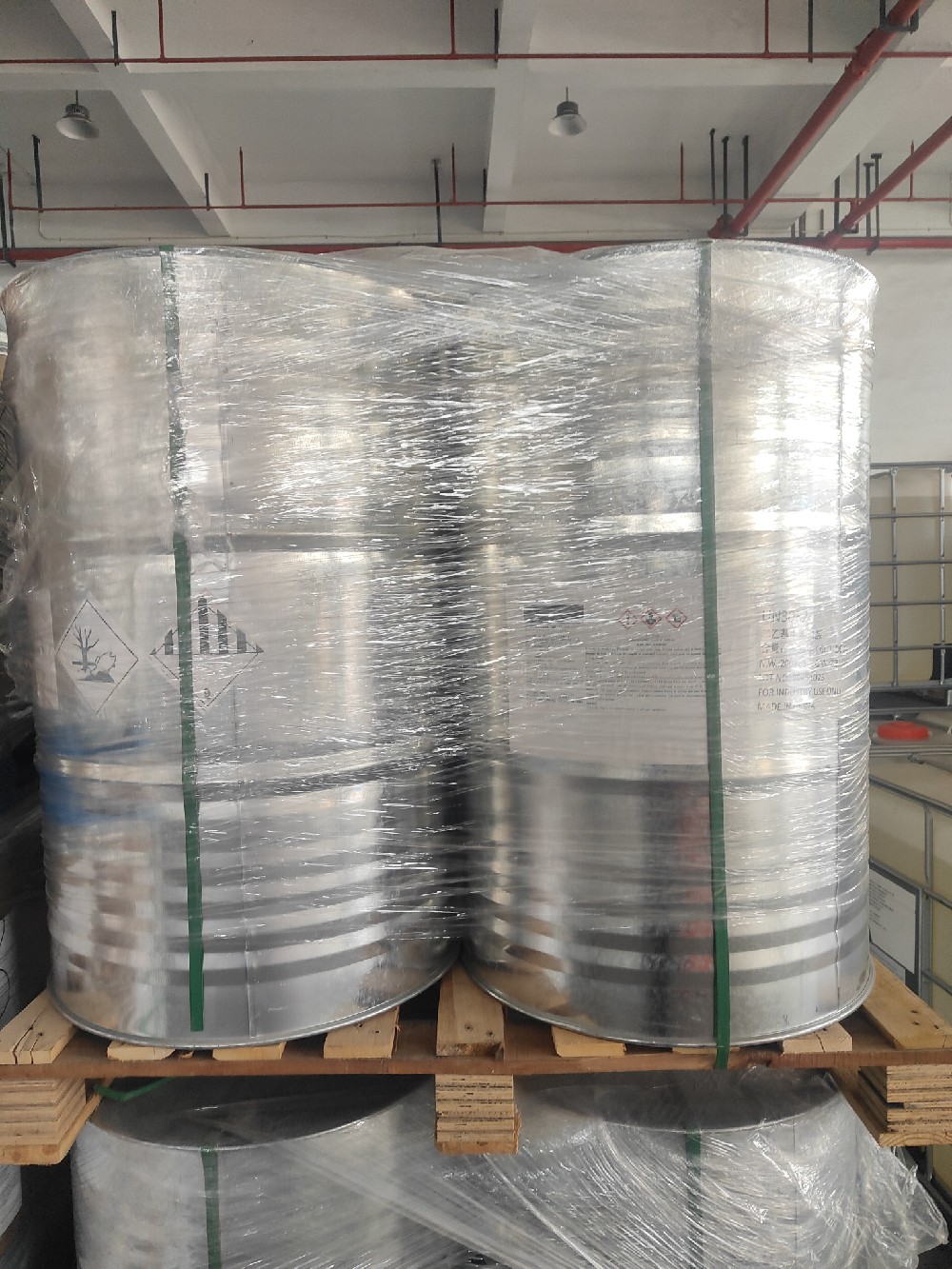
Most solvents on the market trace back to a barrel of crude oil, refined and cracked into a handful of versatile petrochemicals. That supply chain works, but it ties solvent production to an industry with volatile prices, geopolitical tensions, and a carbon footprint that never really goes away. Sawdust, on the other hand, is already piling up as waste at sawmills and furniture factories. It is dry, cheap, abundant, and usually burned or landfilled just to get rid of it. Turning that leftover wood dust into a solvent flips the script: instead of digging deeper for more oil, we are using something that literally falls off the saw blade.
The chemistry is not as exotic as it sounds. Wood is mostly cellulose, hemicellulose, and lignin. With heat, pressure, and a little clever catalysis, those long sugar chains break apart and recombine into a family of oxygenated molecules called furans and levulinates. These compounds have a polar, slightly greasy character that makes them excellent at dissolving resins, inks, and coatings — the same jobs currently handed to toluene, xylene, or acetone. The difference is that the sawdust route starts with carbon that was pulled from the air by a tree a decade ago, not carbon locked underground for millions of years. That does not make it carbon-neutral by magic, but the process can run on its own waste heat and produce far less net CO2 per liter than a crude oil refinery.
There is also a practical argument that rarely gets mentioned in glossy brochures: sawdust does not have to be shipped across an ocean. A solvent plant can sit right next to a lumber mill, using the local surplus and selling back to nearby manufacturers. That shortens the supply chain, cuts freight emissions, and makes the whole operation less exposed to tanker schedules or OPEC decisions. Crude oil will dominate for decades, but for a growing number of industrial cleaning and coating jobs, a bag of sawdust is starting to look like the more rational feedstock.
A separation method that ditches distillation towers
Most chemical plants still rely on towering distillation columns that boil and condense mixtures over and over, burning through enormous amounts of energy just to separate one compound from another. An emerging approach scraps those metal giants altogether and instead uses selective membranes, structured adsorbents, or electrically driven separation cells that pull target molecules out of a stream without ever vaporizing the bulk fluid. Because the separation happens at near-ambient temperature and pressure, the energy penalty drops by as much as 70 to 90 percent compared with conventional distillation.
The heart of the method is a tailored material or field that recognizes only the desired molecule. Polymer membranes with engineered pore sizes let smaller solvents slip through while retaining larger products; metal-organic frameworks and zeolites trap carbon dioxide or water vapor on their internal surfaces and release them under a gentle pressure swing. Some systems even use an electric potential to move ions across a selective barrier, replacing the heat-driven phase change of distillation with a clean, room-temperature migration.
Industrial adoption has been slow mainly because distillation is a known workhorse, and early membrane modules often fouled or lost selectivity after months of exposure to real process streams. Yet pilot plants for bioethanol dehydration, solvent recovery, and post-combustion carbon capture now run reliably for thousands of hours, proving that the towerless route can handle harsh feeds. As fabricators scale up thin-film composite sheets and modular adsorption beds, the days of the distillation tower as the default separator may finally be numbered.
The real-time sensor network slashing reaction times
When a chemical leak begins, every second matters. The sensor mesh scattered across the plant floor doesn't wait for a central command to make a decision. Instead, each node talks directly to its neighbors, comparing readings and triggering alerts at the edge. This cuts out the round-trip to a distant server, turning what used to be a multi-minute lag into a near-instant response. Operators see the alarm on their wrist displays while the cloud is still catching up.
The shift isn't about adding more bandwidth or faster processors. It's about moving the decision threshold closer to the action. A pressure spike in tank four is recognized by the three sensors around it, voted on in milliseconds, and the emergency valve starts closing before a human could even reach for a manual override. That kind of distributed reflex is what separates a contained incident from a cascading failure.
Maintenance teams have learned to trust the mesh's judgment. It doesn't flood them with false positives, because each alert has to be corroborated by at least two neighboring nodes. Yet when the network does speak, it speaks with confidence. The result is a reaction time measured in heartbeats, not in the time it takes to open a dashboard and zoom in on a graph.
Turning spent acids into tomorrow's feedstocks
Spent sulfuric acid from refinery alkylation units or hydrochloric acid from steel pickling has long been treated as a costly disposal problem. The usual route involved neutralization with lime, producing mountains of gypsum or metal-laden sludge destined for landfill. Yet that same acid often still contains recoverable strength and valuable dissolved metals. By shifting the lens from waste to feedstock, operators can strip out impurities, reconcentrate the acid, and return it to the process or convert it into marketable salts.
Modern recovery methods do more than just clean the acid. Membrane systems, thermal cracking, and electrochemical regeneration can separate iron, zinc, or titanium from the acid while restoring its reactive power. In some plants, the extracted metals become iron chloride or zinc sulfate for water treatment and micronutrient fertilizers. Elsewhere, spent acid is reacted with ammonia to yield ammonium sulfate, a stable fertilizer with steady demand. These outputs help close the loop: the acid’s chemical energy and mineral content are captured rather than discarded.
The economic pull is just as important as the environmental push. Fresh acid prices swing with sulfur and energy markets, while disposal costs keep climbing. A well-designed recovery unit can buffer both, turning a variable expense into a predictable internal feedstock stream. Some chemical parks now design shared acid regeneration hubs, where one company’s spent acid becomes another’s raw material. It’s a practical rethinking of industrial chemistry: not waste to be managed, but molecules to be reused.
What happens when chemical plants share process data
When chemical plants start exchanging process data, the first thing that shifts is the speed of problem-solving. Instead of waiting for a quarterly report or a site visit to surface an anomaly, engineers can spot pressure drops or temperature swings in near real time and compare them against similar units elsewhere. That shared view makes it easier to separate a local sensor fault from a broader equipment issue, which cuts down on unnecessary shutdowns and false alarms.
The second change is more subtle but just as important. Operators begin to trust benchmarks that come from actual running plants rather than design specifications. A heat exchanger that has been underperforming for months might finally get attention when its data sits next to a dozen others with the same feedstock. This kind of peer comparison pushes maintenance teams to act on evidence instead of habit.
Over time, this openness also builds a quieter form of resilience. Plants that once guarded every data point start contributing to collective models for corrosion rates, catalyst life, and energy use. The payoff is not always dramatic, but it shows up in longer intervals between turnarounds and fewer surprise trips.
FAQ
The industry kept hitting the same wall: faster cure times usually meant shorter pot life and higher emissions. DETDA Company realized that tweaking existing amine formulas would only get marginal gains, so they shifted to re-engineering the molecular backbone of DETDA itself. That opened up room to improve thermal stability and reduce volatility without sacrificing reactivity.
The low-viscosity, high-activity DETDA variant is probably the standout. It lets formulators run room-temperature cures for thick-section elastomers without preheating, which cuts energy use and cycle times. Several automotive parts suppliers have reported that they can now demold parts 30 percent faster than with standard aromatic diamines.
By lowering the free monomer content and reducing vapor pressure, the new DETDA grades stay in the polymer matrix instead of off-gassing during mixing and curing. That means plants can hit new exposure thresholds without expensive add-on ventilation, and final products carry much less residual amine odor.
They started in polyurethane but the same principles have moved into epoxy toughening, polyurea coatings, and even some specialty composites. One of the innovations, a blocked DETDA derivative, is being tested as a latent hardener for one-component epoxy adhesives that need long shelf life and rapid heat-triggered cure.
The team works directly with mid-size formulators on real production lines, not just in lab-scale reactors. That close-loop feedback allows them to adjust molecular weight distribution and isomer ratios in weeks, not quarters. It's less about publishing white papers and more about solving line stoppages and scrap rate problems on the floor.
A European industrial flooring company switched to the new low-emission DETDA grade for their polyurea topcoats. They reported a 40 percent drop in amine blush and were able to reduce ventilation downtime between coats from 12 hours to 4 hours. That single change let them take on two additional projects per month without expanding their facility.
Expect more bio-based DETDA analogs and reversible-cure chemistries that allow polyurethane parts to be reprocessed or debonded at end of life. The company is also working on a solid, dust-free DETDA masterbatch that eliminates manual weighing and exposure risks in smaller compounding shops.
Conclusion
DETDA Company is quietly reshaping industrial chemistry with a handful of breakthroughs that read more like a wish list than a production pipeline. Their hydrogen catalyst bypasses rare metals entirely, relying on earth-abundant compounds to drive electrolysis at competitive rates. The solvent story is just as striking: instead of pulling feedstocks from crude oil, they extract a high-performance solvent from sawdust and other lignocellulosic waste. Meanwhile, a new separation method removes the need for energy-hungry distillation towers, using membrane or adsorption-based routes that cut both capital costs and steam consumption. These three shifts alone target some of the sector's largest energy and material sinks.
Plant-level data has become a second kind of feedstock. Real-time sensor networks track reaction conditions closely enough to slash cycle times and flag deviations before they become off-spec batches. Spent acids, long treated as hazardous waste, now get regenerated and looped back into the process, shrinking procurement and disposal burdens. Perhaps most telling is the shift toward shared process data across multiple chemical plants. By pooling anonymized operational data, different sites learn from each other's upsets and optimizations, turning isolated experience into a collective production brain that improves yields plant by plant.
Contact Us
Contact Person: WANG SIHAI
Email: [email protected]
Tel/WhatsApp: +86-13815295628
Website: https://www.fortunechemtech.com/index_en.html