
Energy Efficient HVAC System Solutions That Reduce Costs and Boost Comfort
2026-09-26
Are rising energy bills making you cringe every month, even as some rooms stay too hot or too cold? The problem isn't your thermostat—it's an outdated HVAC approach. In this guide, we'll break down energy efficient HVAC system solutions that slash costs while keeping every corner of your space perfectly comfortable. Discover how Tongbaote is redefining climate control with smart, sustainable technology designed for real-world homes and businesses. Ready to stop wasting money and start living in consistent comfort? Let's dive in.
Smart Thermostats That Learn Your Schedule and Trim Waste
Most programmable thermostats ask you to predict your week in advance, which rarely matches real life. A learning model takes a different route: it watches when you adjust the temperature, pairs that with motion and geofencing signals, and builds a shifting map of your household's comings and goings. Within a couple of weeks, it has a decent read on your weekday wake-up, the quiet stretch after everyone leaves, and the evening wind-down. The goal isn't to force a rigid schedule but to start from an informed guess and refine it as your habits drift.
The waste-cutting side shows up in the gaps. If the house sits empty from nine to five, the thermostat eases back instead of holding a cozy setpoint for nobody. It also reads local weather and indoor humidity to decide when it can coast, rather than running the compressor or burner at full tilt. Some models even pre-cool or pre-heat during cheaper, lower-demand periods, then let the home coast through the expensive peak. Over a season, those small retreats add up in ways a fixed timer misses.
What keeps it from feeling like a gadget takeover is the manual override. A learning thermostat doesn't treat a sudden 2 a.m. adjustment as a personal failure; it weighs repeated actions over one-offs. That means you can nudge it warmer for a sick kid or cooler after a workout, and it will fold those patterns in without discarding the broader map. The result is a device that feels less like a programmed timer and more like a quiet collaborator, trimming energy use in the background without demanding much thought.
Heat Pumps: One System for Heating and Cooling Without the Fossil Fuel Bill
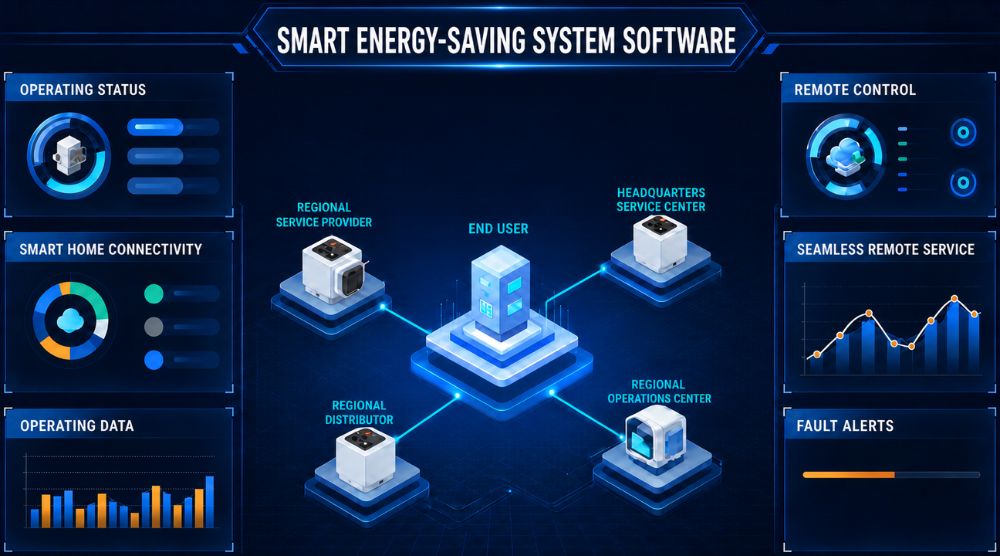
A heat pump doesn't burn fuel to create warmth. It simply moves heat from one place to another, which is why it can handle both heating and cooling with a single unit. In winter, it pulls heat from the outdoor air—even when it feels cold—and transfers it inside. In summer, the process reverses, pushing indoor heat outdoors like a standard air conditioner. That dual action eliminates the need for separate systems, reducing upfront equipment costs and long-term maintenance headaches.
Because a heat pump moves heat rather than generating it, it uses far less electricity than electric resistance heaters and avoids the on-site combustion of gas, oil, or propane. That means no flue, no carbon monoxide risk, and no monthly fossil fuel bill for heating. For homes currently served by delivered fuels or aging boilers, the switch can cut energy costs by 30 to 50 percent, especially when paired with improved insulation and smart thermostats.
Modern cold-climate heat pumps have changed the old assumption that these systems only work in mild weather. Variable-speed compressors and improved refrigerants allow efficient operation down to -15°F or lower, with backup electric strips rarely kicking in. Paired with rooftop solar, a heat pump can deliver nearly all household heating and cooling on sunshine alone—making the fossil fuel bill disappear entirely while keeping the indoor temperature steady year-round.
Variable-Speed Blowers End the Stop-Start Energy Drain
Conventional single-speed blowers treat every demand as an on/off switch: full airflow one moment, nothing the next. Each restart slams the motor with inrush current and forces dampers, belts, and bearings through another stress cycle, while the sudden pressure spike can disturb temperature control. Variable-speed blowers eliminate that pattern by ramping output to match the exact load. Instead of a hard stop, the motor eases down to a low, continuous flow that keeps air moving and thermal mass stable.
Because the blower rarely drops to zero, the energy lost to repeated acceleration and component wear is cut out of the daily cycle. Lower peak currents also reduce demand charges in commercial settings, and the gentler starts extend the life of the drive train. Over a cooling season, those avoided stop-start events add up to measurable savings that show on both the utility bill and the maintenance log.
Zoned Climate Control Stops Paying to Heat Empty Rooms
Most homes waste a surprising amount of energy heating spaces nobody uses. A spare bedroom, a finished basement, or a formal dining room can sit empty for days, yet the thermostat keeps pumping warm air into them. Zoned climate control changes that by dividing your house into separate areas, each with its own temperature setting. You can keep the living room cozy while letting unused rooms drop to a lower, energy-saving temperature.
The real payoff shows up on your utility bill. Instead of paying to heat the entire square footage all winter, you only pay for the zones you actually occupy. Families often find the guest room or home office doesn't need to be as warm as the kitchen or main bedroom. With zoned control, you set a schedule that matches your daily routine, so the heat follows you rather than filling every corner of the house.
Installation is less complicated than many people assume. Motorized dampers inside the ductwork open and close based on signals from multiple thermostats or smart sensors. This means no more closing vents by hand or hoping the heat balances itself out. Over time, the system pays for itself through lower heating costs, and you stop subsidizing the comfort of empty rooms.
Sealing Duct Leaks Turns Your Existing Setup into a High-Efficiency Machine
Most homes lose a surprising amount of conditioned air through gaps in the ductwork before it ever reaches the rooms you’re trying to heat or cool. Sealing those leaks isn’t just a patch job; it forces your current furnace or AC to work less for the same comfort level. The result is a system that suddenly feels more responsive—rooms that used to lag behind now reach the set temperature without you nudging the thermostat.
What often gets overlooked is how much strain leaks put on the blower and other components. When ducts pull in attic dust or push air into crawl spaces, the equipment cycles longer and harder. After a proper seal, the pressure balance shifts to favor the living areas, which means fewer hot and cold spots and a quieter overall operation. It’s one of those rare upgrades that pays for itself through lower energy bills and fewer repair calls.
A professional will usually start with a duct blaster test or smoke pencil to pinpoint the worst offenders before applying mastic or aluminum-backed tape. This targeted approach beats guessing, because the leaks are rarely where you expect them—often at boots, elbows, or poorly connected branch lines. Once sealed, the existing setup runs close to its original design specs, essentially becoming a high-efficiency machine without the cost of replacing the whole unit.
Energy Recovery Ventilators Bring Fresh Air Without Tossing Out Conditioned Air
Most ventilation systems force a frustrating trade-off: open a window for fresh air and watch your heating or cooling bills climb as conditioned air escapes. Energy recovery ventilators (ERVs) sidestep this problem by swapping stale indoor air with fresh outdoor air while transferring heat and moisture between the two streams. In winter, outgoing warm air preheats the incoming cold air; in summer, the process reverses, keeping humidity and temperature in check without overtaxing your HVAC system.
The magic lies in the ERV core, typically a rotating wheel or fixed-plate exchanger that lets energy pass without mixing the airstreams. This means your living room gets a steady supply of filtered, oxygen-rich air, yet the air you already paid to condition stays largely indoors. It's a subtle but profound shift—ventilation stops being an energy leak and starts acting like a smart buffer against outdoor extremes.
For homes in humid climates or tightly sealed modern constructions, ERVs shine where simple exhaust fans fail. They manage moisture transfer so you don't import mugginess in July or strip precious humidity in January. The result is a quieter, more consistent indoor environment: no drafts, no sudden spikes in energy use, just background freshness that feels almost invisible—until you notice how rarely you touch the thermostat.
FAQ
Start with smart scheduling—programming setbacks for unoccupied hours can trim consumption by 10–15%. Adding variable-speed fans and keeping filters clean also lets the system run at lower speeds longer, which uses less power than frequent full-blast cycles.
They learn occupancy patterns and adjust temperatures in real time, preventing heating or cooling of empty rooms. Remote sensors can also average conditions across multiple zones, so you avoid overcooling one area just to fix another.
In most cases yes, especially for systems over 12 years old. A modern unit with a SEER2 rating of 16 or higher can cut cooling costs by up to 30%. Factor in local rebates and the reduced repair frequency, and the payback often lands within 5–7 years.
Dirty coils, low refrigerant, and worn belts force the system to work harder for the same output. Annual tune-ups can restore 5–10% of lost efficiency and catch small issues before they become expensive compressor failures.
Yes. By using motorized dampers and separate thermostats, zoning directs conditioned air only where it's needed. That eliminates the common problem of heating or cooling unused guest rooms, which typically wastes 20–30% of energy.
The best HVAC system can't perform if conditioned air leaks through gaps in ductwork or the building envelope. Sealing ducts and adding attic insulation often reduces heating and cooling loads by 15–20%, allowing smaller, cheaper equipment to do the same job.
Demand-controlled ventilation, economizers, and high-efficiency motors often get skipped because they aren't visible. Yet these behind-the-scenes upgrades can reduce energy use by 10–25% with minimal disruption to daily operations.
If repair costs exceed 50% of a new unit's price and the old system is over 10 years old, replacement usually wins. Newer models have better part-load performance and qualify for utility incentives, which closes the financial gap faster than most people expect.
Conclusion
Rethinking HVAC efficiency starts with cutting the waste you never see. A smart thermostat that learns occupancy patterns and adjusts setbacks automatically can shave noticeable dollars off monthly bills without making the house feel neglected. Pair that with variable-speed blowers, and the system stops lurching between full blast and off, instead ramping gently to hold temperature with far less electricity. Zoned climate control takes the same logic room by room, so unused bedrooms or a formal dining room aren't being heated or cooled to the same degree as the living spaces you actually occupy. Together these controls turn a dumb, whole-house approach into something closer to precision conditioning.
On the equipment side, a modern heat pump often delivers heating and cooling from one unit, avoiding the cost and carbon of a separate gas furnace. For homes that already have ductwork, sealing leaks can recover a surprising share of conditioned air that was escaping into attics or crawl spaces, making the existing setup run like a much higher-efficiency machine. In tighter, better-sealed homes, an energy recovery ventilator keeps air fresh by exchanging stale indoor air with outdoor air while transferring heat and moisture—so you're not throwing away the air you just paid to condition. Combined, these strategies cut energy use, lower utility bills, and keep comfort steadier in every season.
Contact Us
Contact Person: Wanshu Chen
Email: [email protected]
Tel/WhatsApp: +86-13662871206
Website: https://www.mbcee.com