
Hot-Dip Galvanized Flat Bar: Top 10 Companies for Quality and Reliability
2026-10-19
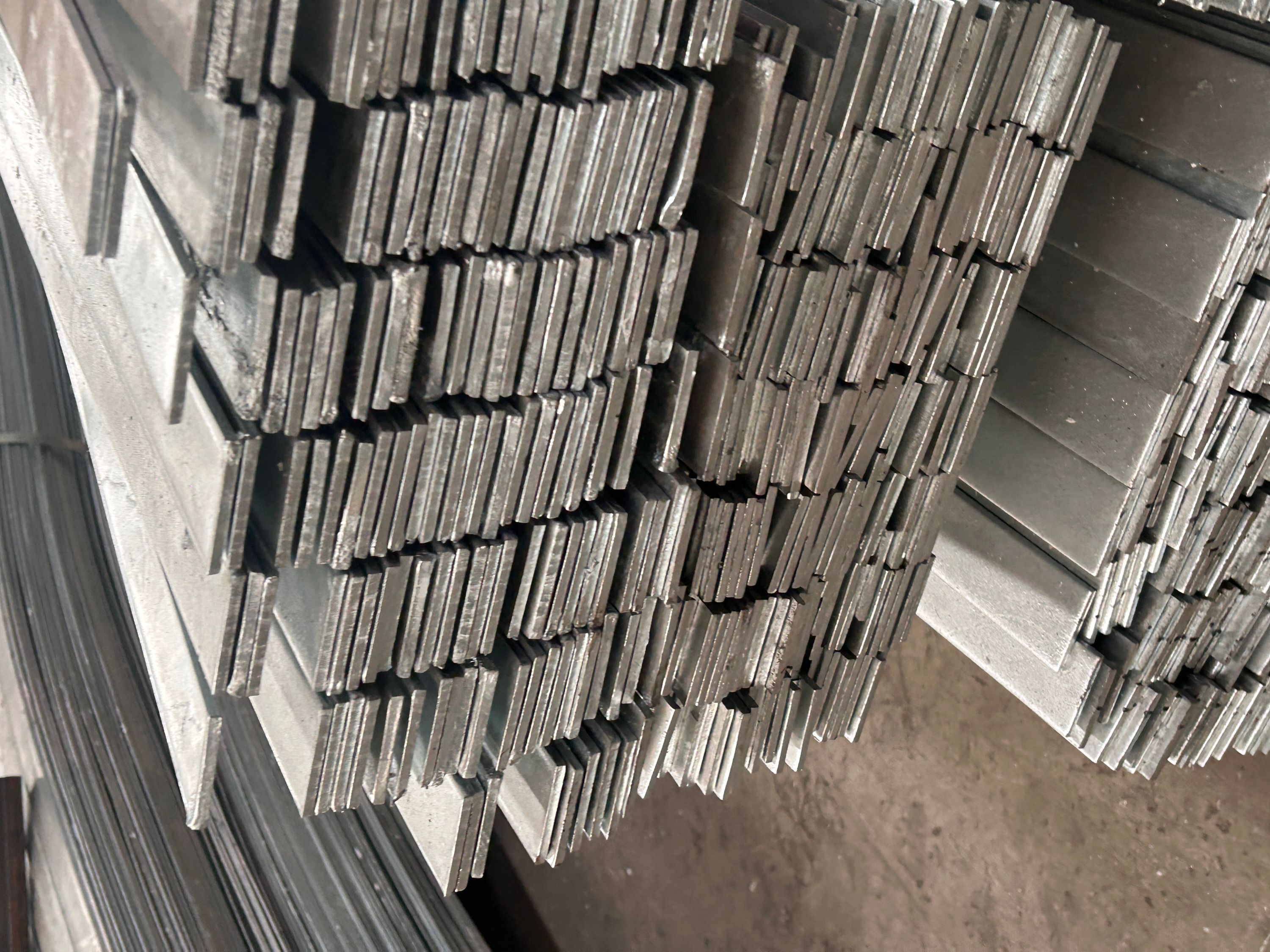
When it comes to hot-dip galvanized flat bar, the difference between a project that lasts and one that fails often comes down to who you buy from. Too many suppliers promise quality, but only a handful deliver the corrosion resistance, dimensional accuracy, and consistency that demanding applications require. This list cuts through the noise, spotlighting ten companies that have earned a reputation for reliability—including Shunchen steel, a name that keeps surfacing among contractors who refuse to compromise. Whether you're fabricating supports, frames, or reinforcements, the right partner can save you from costly rework down the line. Let's meet the ones worth your trust.
Coating Thickness Usually Reveals More Than the Data Sheet
A spec sheet might list 25 microns as the target dry film thickness, but handheld gauges rarely tell such a tidy story. Walk a line with a calibrated probe and you start seeing patterns: edges running thin where the spray gun lingered a half-second less, recessed areas piling up because the operator compensated for poor access. Those numbers, collected across a few dozen parts, expose how the process actually behaves—not how it was designed.
Thickness variation often tracks directly to long-term failure modes. A coating that dips to 12 microns in a corner may pass a single-point audit but will sacrifice corrosion resistance exactly where moisture collects. Conversely, a heavy build of 80 microns near a weld can crack under thermal cycling simply because the film was never meant to flex that much. The data sheet gives you a range; the measured profile tells you whether the applicator understood the geometry.
Experienced inspectors learn to read thickness like a fingerprint. Consistent readings across a complex surface suggest disciplined technique and good equipment maintenance. Scattered highs and lows, even if every value sits inside the spec, point to rushed work or an unoptimized spray pattern. That's why savvy buyers don't just request thickness reports—they ask to see the raw measurement points and the map of where they were taken.
Why Some Galvanizing Lines Keep Zinc Bath Details Quiet
For an outsider, a zinc bath looks like a simple vat of molten metal. But the operators running a galvanizing line know that what happens inside that bath is rarely as straightforward as the spec sheets suggest. The exact aluminum level, the temperature gradient from one end of the pot to the other, and the way dross is managed are all tuned through years of trial, error, and quiet observation. These details aren't written down in any public manual, and there's a good reason for that.
Small shifts in bath chemistry can change coating thickness, surface finish, and adhesion in ways that are hard to predict from standard formulas. A line that runs smoothly at 0.12% aluminum might develop bare spots or brittle coatings at 0.14%, and the fix often comes from experience rather than textbook metallurgy. Operators also deal with local variations in strip temperature, line speed, and incoming steel surface condition. That accumulated, site-specific knowledge is valuable precisely because it cannot be transferred easily.
There's also a practical business logic to the silence. If a competitor learns the exact bath parameters and additive schedule, they could shave years off their own learning curve. And if a customer hears that bath details are being adjusted week to week, they might start questioning consistency—even when the adjustments are exactly what keeps quality stable. So the details stay inside the control room, shared verbally among veteran operators and maintenance crews, not published or discussed with outside visitors.
Small Defects That Become Big Problems After Installation
A hairline crack in a sealant bead or a slightly uneven tile edge rarely raises alarms during the final walkthrough. But once daily use, humidity shifts, and thermal expansion take over, those imperfections begin to work against the structure. A tiny gap in a window seal lets condensation seep into the frame, rusting hardware and feeding mold long before anyone notices the musty smell.
The real cost shows up months or years later, often as a much larger repair. A cabinet door that rubs against an adjacent panel because of a two-millimeter misalignment gradually wears through the finish and loosens the hinge screws. A floorboard with a slightly shallow groove may hold fine for the first season, but repeated foot traffic and cleaning moisture start to lift the edge, turning a quick fix into a full plank replacement.
What makes these defects so deceptive is their timing. On installation day, they look like cosmetic oversights. Over time, they become channels for water, points of friction, or weak spots that spread stress to neighboring components. The most practical approach is to treat every small misalignment, uneven bead, and rough edge as a future failure waiting for the right conditions, rather than a detail that can be sorted out later.
How to Spot a Supplier That Actually Tests Every Batch
Ask for the last three batch-specific certificates of analysis, not a generic spec sheet. A real testing operation will send separate COAs with distinct lot numbers, actual numerical results, and test dates. If the documents look copy-pasted or only list typical ranges without raw data, treat that as a red flag. You can also check for instrument IDs, analyst initials, and electronic signatures—these small details are hard to fake and usually appear on genuine lab reports.
Push them to describe the exact test method for one of your key parameters. A supplier that runs every batch will instantly mention the method, column type, or pharmacopeia chapter without pausing. Vague answers like “we follow standard QC procedures” often mean testing is outsourced or skipped. Ask for a live video walkthrough of the lab; a truly testing supplier won’t hesitate to show the HPLC, dissolution apparatus, or micro lab even if the video quality is rough.
Finally, ask how they handle out-of-specification results. If the reply is “that never happens” or they can’t describe an OOS investigation, be suspicious. Every genuine testing program occasionally rejects a batch, and the supplier should be able to explain the failure, root cause, and corrective action without getting defensive. Request the raw third-party PDF report for the last batch instead of an edited summary—unedited documents are much harder to fabricate.
What Long-Term Users Say About Flat Bar Performance
After a few seasons on flat bars, I keep coming back to how direct the steering feels. There's no sweep to guess through, and when you're threading through traffic or picking a line on gravel, the front wheel goes exactly where your hands push. Some folks complain about wrist fatigue, but I've found swapping grips and adding a tiny bit of backsweep makes all-day rides just as comfortable as drops for my body.
Climbing steep stuff is where the flat bar really shines for me. You can pull up hard on the grips without your shoulders rolling forward, and standing efforts feel more stable because your weight stays centered. Long descents are a trade-off though—there's only one hand position, so after an hour of braking and bumping, I do miss being able to stretch out. But for mixed surface riding and short commutes, flat bars just feel more connected to the bike.
The Quiet Ways a Mill Saves Money on Steel Prep
Steel prep rarely grabs the spotlight in a mill's budget, but the quiet adjustments—blend tweaks, trim optimization, scheduling shifts—tend to stack up into real savings without anyone noticing. One mill I walked through had started nesting smaller coils inside larger remnants from cut-to-length lines. The scrap bin looked cleaner, but nobody announced it; they just kept feeding the line.
Another mill changed how they staged incoming plate. Instead of moving every sheet twice to reach the shear, they reorganized the receiving yard so high-turnover grades sit closest to the prep area. It sounds obvious, but the old layout had been set for years, and nobody questioned it until a new supervisor timed the forklift routes. They shaved eleven minutes per shift off travel time, which adds up to fewer overtime hours and less fuel burn.
Then there’s the quieter habit of tracking offcuts by thickness and width, not just total tonnage. A fabricator I know started tagging drops with a simple color code, so the next job could pull from inventory instead of cutting fresh plate. Their purchasing team stopped buying as much new steel, and the yard stopped paying to haul away as much scrap. No fancy software, just a mark on a tag and a different way of looking at what was already sitting there.
FAQ
Reliability comes down to consistent zinc coating thickness, traceability of the steel batch, and a track record of on-time delivery. The top firms typically have in-house galvanizing lines and ISO 9001 certification, which helps them catch defects before shipping.
Nucor Corporation usually takes the top spot because they run highly automated hot-dip lines and publish real-time coating weight data. Their flat bars often exceed ASTM A123 minimums by 15-20%, which gives fabricators extra corrosion protection without extra cost.
ArcelorMittal focuses on tight dimensional tolerances and uniform zinc coverage, especially on edges. They use a double-skimming process during galvanizing, which reduces dross inclusions that can cause early rust spots.
Yes, several offer a thicker coating option or a specialized alloy layer. For example, POSCO and Tata Steel provide a coastal grade flat bar with a slightly higher nickel content in the zinc bath, which slows down salt spray corrosion significantly.
Ask for the actual mill test report, not just a certificate of conformance. Check the coating weight in ounces per square foot, the silicon content of the base steel (too much silicon can cause brittle coating), and whether the bars were quenched after galvanizing to prevent peeling.
Yes, Gerdau and voestalpine both have strong regional production in South America and Central Europe respectively. They often beat bigger names on lead time for local projects because they don't have to ship across an ocean.
The list is reviewed every 12 months. A company can drop off if their defect rate climbs above 0.5%, they miss more than two delivery deadlines in a quarter, or they lose their ISO 9001 accreditation.
Conclusion
When evaluating hot-dip galvanized flat bar suppliers, the nominal coating thickness on a mill certificate rarely tells the whole story. Experienced buyers measure actual zinc coverage across the bar's edge and flat surfaces, because uneven distribution can go unnoticed on paper yet fail quickly in corrosive environments. Some galvanizing lines prefer not to disclose their zinc bath chemistry or temperature practices—details that directly affect adhesion and finish consistency. Without that transparency, small defects like pinholes, dross inclusions, or uncoated cut ends stay hidden until the flat bar is already installed. Once in service, these seemingly minor flaws become rust spots, peeling, or structural weak points that are far more expensive to repair than to catch before shipment.
A dependable supplier stands out through batch-level testing rather than periodic spot checks. Ask how many bars from each lot are pulled for thickness, bend, and adhesion tests, and whether those results are shared with you before delivery. Long-term users of galvanized flat bar often report that the best-performing materials come from mills that also prepare steel properly—clean pickling, correct pre-flux, and minimal time between surface prep and zinc immersion. Some mills quietly cut costs by shortening dwell times or using lower-purity zinc, which can work for a while but shows up in field performance after a few seasons. For a top-ten ranking in quality and reliability, these behind-the-scenes practices matter as much as the final product's appearance.
Contact Us
Contact Person: Max Zhou
Email: [email protected]
Tel/WhatsApp: +86 15712216177
Website: https://www.shunchensteelmaterial.com/