
Karate Hand Guards Service for Enhanced Hand Safety and Performance
2026-10-19
你的双手是空手道中最可靠的武器,但也是最脆弱的部位。一次意外的撞击就可能让你数周无法训练。而合适的护具不仅能挡住伤害,更能让你在出拳时毫无顾虑、发挥全力。这就是为什么PandaWin Sports致力于提供专业的空手道手部护具服务——不只是保护,更是为你的每一次击打建立信心。接下来,我们将带你了解如何通过这项服务提升手部安全性与整体表现。
The Hidden Risks of Training Without Hand Protection
Most lifters assume calluses and torn skin are just part of the game, but training bare-handed quietly invites a range of less visible problems. Grip fatigue sets in earlier when you constantly fight friction, forcing compensations in wrist and elbow alignment. Over weeks, those micro-adjustments add up to nagging tendinitis or a strained forearm that never quite heals.
There's also the overlooked matter of hygiene and skin integrity. Shared bars, dumbbells, and pull-up stations carry bacteria that slip into tiny abrasions you don't even notice mid-set. Without a barrier, a small tear becomes an entry point for staph or fungal infections, sidelining you far longer than any muscle soreness would.
Hand protection isn't about pampering your palms—it's about preventing the slow erosion of grip strength, joint health, and training consistency. Once those hidden risks compound, the fix is rarely as simple as slapping on tape. It demands weeks of reduced load and tedious rehab that could have been avoided with a proper pair of grips.
Fit Matters More Than You Think for Karate Guards
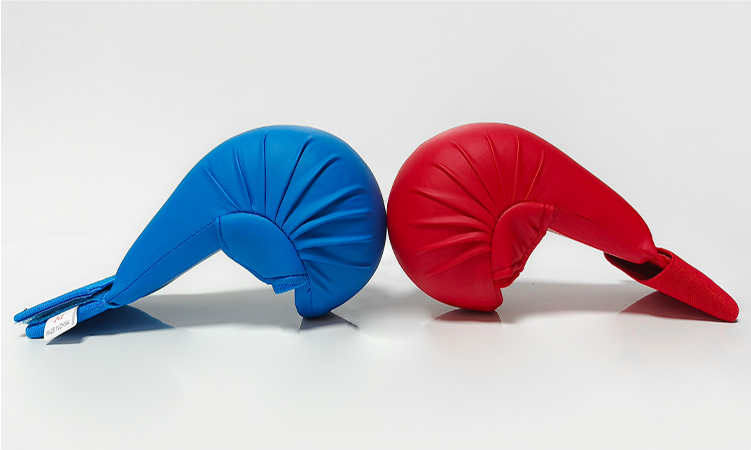
A guard that's even a half-size too loose can shift mid-block, leaving your forearm exposed at the worst possible moment. The snugness around the wrist isn't about restriction—it's about creating a stable anchor so your hand doesn't slide inside the padding when you take a hard strike. Many karateka don't realize that a proper fit lets you keep your fingers relaxed, which actually improves your reaction speed instead of forcing you to grip constantly just to hold the guard in place.
When the elastic or strap sits too tight, blood flow gets cut off and your forearm starts to fatigue within minutes. That dull ache you feel during long sparring sessions often has less to do with conditioning and more to do with a guard that's squeezing the wrong spots. The sweet spot is a fit that stays put through rapid combinations but still lets you slide two fingertips under the inner lining once you're geared up.
Off-the-shelf sizing charts rarely account for the shape of your hand and wrist together. Try the guard on with your gi sleeve pulled down, then throw a few reverse punches—if the padding rotates even slightly, that misalignment will only get worse as you sweat. A well-fitted guard feels almost forgettable during practice, and that's exactly the sign you've got it right.
Impact Absorption: What Quality Padding Actually Does
Quality padding doesn't just soften a blow—it manages energy. When a helmet or protective gear meets an impact, the foam inside compresses in a controlled way, spreading the force over a larger area and buying a few critical milliseconds for your body to decelerate. That's the real job: not making things feel plush, but turning a sharp, localized hit into a duller, broader push that your bones and brain can handle without damage.
Cheap foam rebounds too fast or collapses too soon. The good stuff has a specific density and cell structure that lets it crush progressively—stiff at first to resist the initial shock, then softer as the energy gets absorbed. You can feel the difference when you press your thumb into it: quality padding gives back slowly, almost reluctantly, instead of springing back like a kitchen sponge. That reluctance is what keeps impacts from traveling straight through to you.
It also matters where the padding sits and how thick it is. A well-designed insert isn't just stuffed everywhere; it's shaped to match the curves that actually take hits, like the crown of a helmet or the knuckles of a glove. Thickness alone won't save you if the material can't distribute the load—too much soft foam just bottoms out, leaving you with the same hard surface underneath. Quality padding works because it's engineered for the specific impact profile it's meant to face.
Wrist Support and Mobility Can Coexist
It's easy to think of wrist supports as rigid braces that lock your hand in place, but that assumption is outdated. Newer designs pair low-profile hinges with breathable, segmented panels to stabilize the joint without freezing it. The result is support that tracks your natural movement—you can still rotate, flex, and extend your wrist within a safe range. Instead of fighting the brace, your hand works with it, which matters a lot during long typing sessions or when you're easing back into lifting after an injury.
The real breakthrough is in how tension is distributed. Rather than wrapping the wrist in stiff compression, many modern supports use adjustable straps around the forearm and palm, leaving the carpal area freer. That means you can dial in more stability for heavy tasks and loosen it for fine motor work like drawing or using a screwdriver. Mobility doesn't get sacrificed; it gets managed. And because the support doesn't force a single static position, you avoid the stiffness that often comes from wearing a traditional splint all day.
From Sparring to Kata: Adapting Your Guards to the Drill
A guard that keeps you safe in sparring can look out of place the moment you step into a kata. Free exchanges reward a loose, mobile hand position that adapts to incoming strikes, while kata often demands a precise, almost ritualized starting posture. The work isn't to abandon one for the other but to recognize what each guard is actually teaching you. Sparring guards build reaction time and protect your center; kata guards force you to hold a shape long enough to notice small misalignments in your wrist, elbow, and shoulder.
Start by picking a single transition from your sparring stance into the kata's opening guard and move through it as slowly as you need to keep the line smooth. If your hands want to drift back toward a fighting frame, pause and reset rather than forcing the position. A useful check is to run the kata's first three movements from that adapted guard, then return to light sparring and see what has changed. Usually the drift isn't about forgetting the drill, but about your body refusing a shape it hasn't yet learned to trust.
Extending Gear Life With Simple Daily Habits
Most gear wear doesn't come from a single catastrophic event—it builds up quietly through skipped wipe-downs, ignored grit, and hasty storage. Spending sixty seconds after each ride to brush off dust and road debris from the chain, cassette, and derailleur pulleys does more than most expensive upgrades. A dry rag or a soft-bristle brush works fine for surface grime. What matters is doing it before the particles get worked into the pins and rollers, where they act like sandpaper every time you shift under load.
Lubrication habits make an even bigger difference, but only when you apply the right amount in the right place. Too many riders drown the chain in lube, which attracts dirt and turns into a grinding paste. Instead, put one small drop on each roller, spin the cranks a few times, then wipe off every bit of excess from the outer plates. Let it sit for ten minutes before riding so the oil can seep into the bushings rather than flinging off on the first pedal stroke. In dry conditions, reapply every hundred miles or whenever the chain starts sounding dry—not on a random schedule.
Finally, pay attention to how you store and transport the bike. Leaning it against a wall where the rear derailleur can get bumped, or hanging it by the rear wheel so the chain rubs against the frame, slowly bends hangers and stretches links. Use a proper stand or hook that supports the frame, and keep the bike indoors or under a cover to avoid morning dew and temperature swings that accelerate rust. These are not heroic efforts—they are just small, repeatable choices that keep your drivetrain running smooth for thousands of extra miles.
FAQ
It covers a full assessment of your training intensity, hand measurements, and then a custom-fitted guard setup that balances mobility with impact protection.
The design uses layered foam and a snug wrist wrap, so you keep full finger articulation while reducing the sting from heavy bag work or partner drills.
Anyone from beginners who bruise easily to advanced competitors fine-tuning their speed — basically anyone who wants to train longer with fewer hand injuries.
Yes, because less fear of impact means you commit to strikes more fully, and the lightweight build doesn't slow your hands down.
The service can be adapted for point sparring, full contact, or traditional kata practice by adjusting the padding density and coverage.
Usually about 20 minutes, including some test strikes on a pad to make sure nothing shifts or pinches.
While designed for karate, they work fine for kickboxing or MMA bag work if you want a lower-profile alternative to bulky gloves.
Wipe them down after each session and let them air dry away from direct heat; the hook-and-loop closure holds up for months with regular use.
Conclusion
Many karateka only notice hand damage when it's too late: hairline fractures from heavy bag work, bruised knuckles from sparring, nagging wrist pain from blocking drills. Without protection, these small injuries accumulate, stealing power and precision. But grabbing any pair of guards isn't enough. Fit decides everything—too loose and the padding rolls mid-punch, too tight and your hand goes numb while your speed drops. Good padding doesn't just cushion; it spreads impact across a wider area, so no single bone takes the full force. That's the difference between finishing a hard session and icing your hands for two days.
Stiff wrist support used to mean sacrificing fluid movement, but that trade-off no longer exists. Low-profile wraps and segmented stays brace the joint while letting your hand flex naturally for hooks, blocks, and open-hand techniques. For sparring or bag work, reach for denser knuckle foam; for kata, switch to thinner guards that don't blur your hand shapes. Rotating gear also extends its life, along with simple upkeep: rinse salt out after training, let guards air dry away from direct sun, and replace them when straps lose grip. When hand protection fits your drills and your hands, training feels safer, sharper, and more sustainable.
Contact Us
Contact Person: Fei Xu
Email: [email protected]
Tel/WhatsApp: +8618631245578
Website: https://www.pandawinsports.com/