
MNS Switchgear Manufacturer: What to Look for in a Reliable Partner for Low-Voltage Switchgear Solutions
2026-10-15
Choosing the right MNS switchgear manufacturer can make or break your low-voltage distribution system. With so many suppliers claiming reliability, how do you separate genuine expertise from empty promises? Whether you're upgrading an industrial plant or designing a new commercial facility, the partner you select directly impacts safety, uptime, and long-term costs. That's where MOLDVOLT comes into focus—but before you commit, let's explore what truly matters in a manufacturer.
Insist on a Full Type-Test Certificate Before You Shortlist
A type-test certificate is not a formality; it’s the only proof that a product has actually survived the extreme conditions your project may one day throw at it. Shortlisting a manufacturer without this document means you’re taking their word for internal checks, not verified performance. Ask for the full certificate, including the test parameters and the laboratory that issued it. If any detail is missing, move that supplier to the bottom of the pile.
Some vendors offer partial reports or certificates for a similar model, hoping you won’t notice the difference. This is where pressure from deadlines can lead to costly compromises. A full type-test certificate covers the exact configuration, rated current, short-circuit withstand, and temperature rise under load. When those numbers are absent or borrowed from another product line, the equipment may fail precisely when you need it most.
Make the certificate a gatekeeping criterion before any technical evaluation. Once you accept a shortlist without it, you implicitly signal that documentation can be negotiated later. Suppliers with genuine test data never hesitate to share it. Those who stall or provide redacted pages are telling you something about how they handle quality. Trust that signal, and keep your shortlist clean.
Match Busbar Ratings to Your Real Fault Current, Not a Generic Label
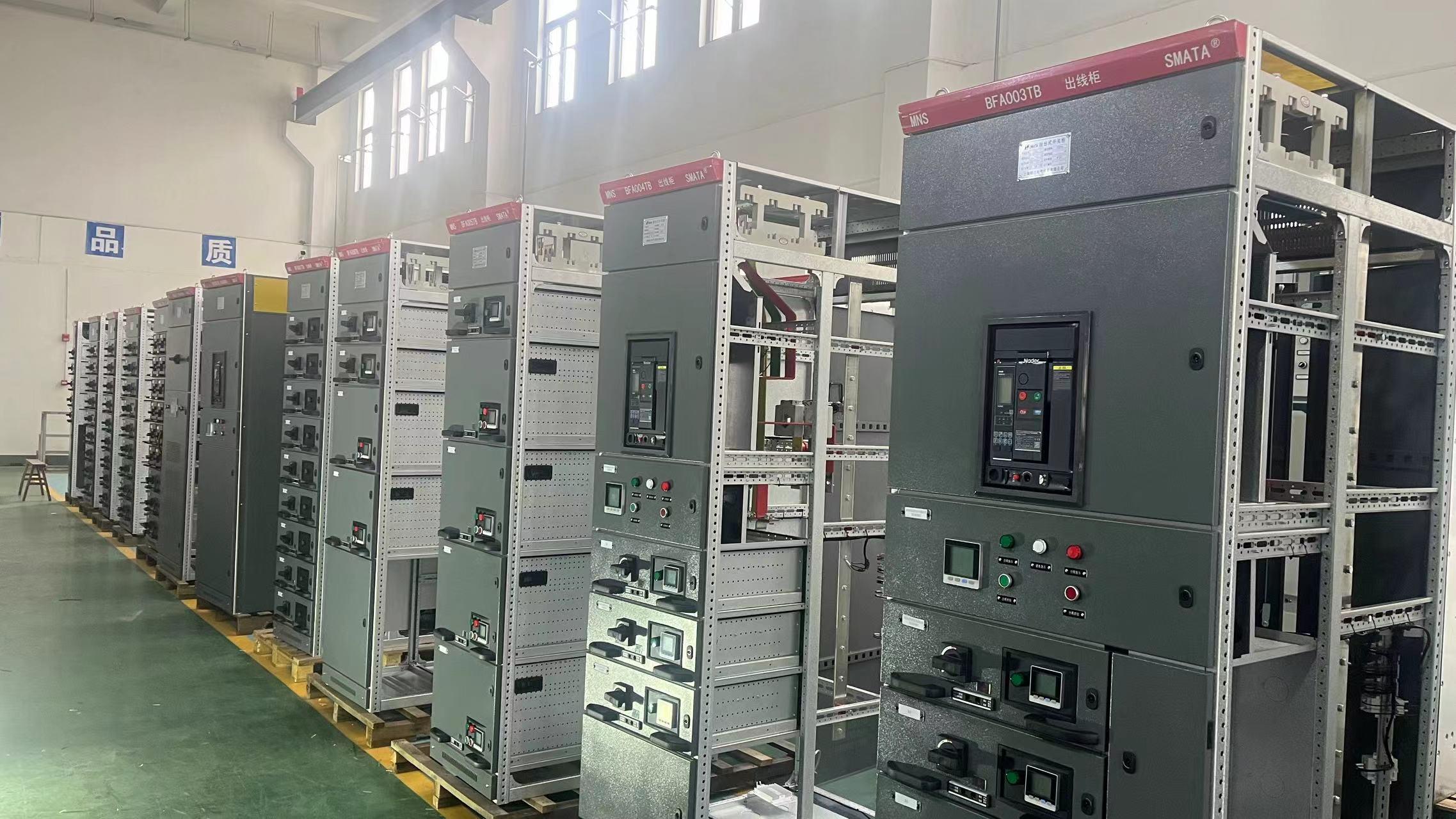
Most busbar specifications come with a single fault current rating, but your actual system rarely matches that number. A panel rated for 65 kA might sit in a facility where the available fault current is only 22 kA, or it could be in a location with a momentary spike reaching 85 kA due to nearby motor contributions. Using the generic label as your design basis either adds unnecessary cost through over-specification or introduces a dangerous margin of error through under-specification.
The practical approach starts with calculating the true available fault current at the busbar's point of connection. This means accounting for transformer impedance, conductor length and size, plus any upstream protective device that limits let-through current. A 1600 A busbar fed by a 500 kVA transformer with 5.75% impedance will have a very different fault profile than the same busbar fed by a 1000 kVA unit, even if both carry the same nominal current. Ignoring this leads to either wasted copper or overheated joints during a real fault.
Beyond the initial calculation, consider how the fault current changes over time. A busbar that handles 50 kA for three cycles may fail under 40 kA for 30 cycles if the upstream breaker has a long clearing time. Thermal and mechanical withstand ratings are time-dependent, yet many engineers treat them as a single pass/fail number. Matching the busbar to your real fault current means verifying both the peak and the RMS let-through under your actual protection scheme, then selecting a busbar whose withstand curve stays above that profile. This level of detail keeps you from paying for capacity you'll never use—or trusting a label that doesn't reflect your site's reality.
Scrutinize Draw-out Unit Interlocks and Shutter Mechanisms
Draw-out units rely on mechanical interlocks to guarantee that a breaker cannot be racked into or out of its compartment unless it is in the open position. These interlocks often operate through cams, levers, or sliding plates that physically block the racking mechanism. During inspection, pay close attention to any deformed edges, cracked welds, or loose fasteners; even slight wear can allow the interlock to be bypassed.
Shutter mechanisms are the movable barriers that cover the fixed primary disconnects when the unit is removed. They should close fully and automatically once the breaker clears the guide rails. Manually operate the shutters with the proper tool and confirm they travel smoothly without sticking. Any hesitation or partial closure leaves live terminals accessible and defeats the safety design.
Functional testing should combine both systems. With the breaker open, rack it partway out and verify the shutters remain closed until you deliberately actuate the release. Then rack the breaker back in while watching that the shutters open only when the unit is aligned. Record any required force, unusual noise, or misalignment. Replace worn parts before returning the equipment to service.
Look for Local Engineering Support That Can Adapt Layouts Quickly
When product timelines shift or a client requests a last-minute change, the ability to pivot without burning weeks on back-and-forth communication becomes the real differentiator. Local engineering teams offer something outsourcing partners often can't: they are only a short call or drive away, which means layout adjustments happen in hours, not days. Whether it's rerouting a cable harness, moving a connector location, or reworking a PCB outline, having someone nearby who understands both the design intent and the manufacturing constraints saves you from costly misinterpretations.
The value of local support really shows in the small, frequent changes that pile up during prototyping. Instead of waiting for a time-zone overlap or a translated email thread, you can sit down with an engineer who has already seen your board spin, point to the exact area that needs to shift, and get a revised layout before the next build starts. This kind of rapid iteration doesn't just keep the schedule on track—it encourages more experimentation, because you know a quick tweak won't derail the entire project.
Beyond speed, there's a practical reason to prioritize local layout help: they are more likely to be familiar with the regional supply chain, preferred fabrication houses, and assembly partner quirks. If a component is suddenly out of stock, a nearby engineer can suggest an equivalent footprint that fits the existing pads, or re-route a trace pattern to match the stock reel you actually have on hand. That level of contextual awareness is hard to replicate remotely, and it often turns a potential delay into a non-event.
Check Arc Flash Mitigation Measures Beyond Basic Compliance
When basic arc flash labels and PPE are already in place, the next step is to question whether the calculated incident energy can be reduced at the source. Many facilities overlook that adjusting protective device settings—such as enabling a maintenance mode on trip units or using temporary instantaneous settings during live work—can drop arc flash energy below the threshold where heavy cotton underlayers become unnecessary. This isn't just about adding more signs or purchasing higher-rated suits; it's about re-evaluating the coordination study with a specific focus on reducing clearing times. A breaker that trips in 0.08 seconds instead of 0.5 seconds can be the difference between a second-degree burn and a fatal exposure.
Beyond settings, physical design changes often deliver stronger risk reduction than administrative controls. Arc-resistant switchgear, remote racking devices, and infrared inspection windows let workers stay outside the arc flash boundary for routine tasks like racking breakers or checking connections. Some plants also install high-speed arc flash detection relays that use light sensors to trip a breaker in a few milliseconds—far faster than traditional overcurrent protection alone. Pairing these with continuous thermal monitoring on critical bus joints can catch loose connections before they escalate, shifting the focus from surviving an arc flash to preventing it altogether.
Confirm Service Reach for Spare Parts, Retrofits, and Field Repairs
Before a single part leaves the warehouse or a technician is dispatched, our team verifies the actual service boundary for each request. That means checking whether the site falls within an existing support region, whether the equipment model is still covered under a retrofit program, and whether the failure type matches our field repair capabilities. This step prevents wasted trips and delays that often come from assuming coverage rather than confirming it.
Spare parts requests are matched against current inventory buffers tied to the customer’s location and contract level. For retrofits, we cross-check the unit’s serial number and revision history to confirm the upgrade kit is compatible before it ships. Field repairs go through a similar screen: voltage class, environmental restrictions, and local certification requirements are reviewed up front so the assigned engineer arrives with the right tools and approvals.
If a request sits outside the confirmed reach, the customer is told exactly which gap needs to be closed—whether it’s a temporary service extension, a different parts depot, or a scheduled retrofit window. The goal is not to filter out work, but to give every inquiry a clear yes or a realistic alternative within one business day.
FAQ
Look beyond a glossy brochure. Ask for a factory tour or detailed process documentation that shows how they handle busbar fabrication, sheet metal work, and assembly tolerances. A dependable partner will be open about their production line and quality checkpoints.
Rarely will a standard panel fit your exact footprint, cable entry, or protection scheme. A strong manufacturer offers modular designs that can be adapted without losing type-test certification or adding months to delivery.
Type-test certificates from an independent lab are essential, not just a declaration of conformity. Also verify ISO 9001 for quality management and any local grid code compliance. If they cannot produce these documents quickly, treat that as a red flag.
It often matters more than the initial price. You need someone who can ship spare breakers and busbar sections years later, offer commissioning help, and respond to site issues without a long chain of approvals. Ask for examples of recent after-sales cases.
Check for consistent welding, clean busbar bending, proper labeling, and neat wiring looms. These small details reflect the discipline applied to internal connections that you cannot easily see. Also ask for routine test reports from every panel, not just a random sample.
Look for arc containment strategies, finger-safe terminal covers, clear separation of busbar compartments, and a proven arc flash rating. Also check whether they calculate short-circuit withstand and temperature rise for your specific configuration rather than relying on generic tables.
Yes, especially for large or phased projects. A manufacturer with local engineering and service teams can shorten lead times, handle design revisions faster, and provide on-site assistance during installation or upgrades without international travel delays.
Reluctance to share test certificates, vague delivery promises, no documented change control process, and an inability to show past project references with similar ratings or configurations. Also be wary of very low prices that do not account for proper copper sizing or protective devices.
Conclusion
When shortlisting MNS switchgear manufacturers, the first thing that separates serious vendors from the rest is a complete type-test certificate. Without it, you're left trusting design claims rather than proven performance under fault conditions. Equally important is matching the busbar rating to your actual prospective fault current—many suppliers quote a generic value that may not reflect the stresses your installation will see. Don't overlook the mechanical details either. Draw-out unit interlocks and shutter mechanisms deserve a close look because these are the components that protect maintenance staff during routine operations and prevent dangerous misinsertion.
Beyond the hardware, a dependable partner should offer engineering support that can adjust layouts quickly when site conditions change, not just a rigid catalog approach. Arc flash mitigation matters too—ask whether the manufacturer has gone beyond basic compliance with features like arc-resistant enclosures or fast-acting protection schemes. Finally, confirm their service reach for spare parts, retrofits, and field repairs. A low-voltage switchgear solution is a long-term commitment, and the right manufacturer will stand behind the equipment years after commissioning, with local stock and trained technicians who understand your specific installation.
Contact Us
Contact Person: Hellen
Email: [email protected]
Tel/WhatsApp: 86-13634205622
Website: https://www.voltcabinet.com