
OEM Stainless Steel Fasteners: The Complete Guide to Corrosion-Resistant Industrial Components
2026-10-14
If you’ve ever replaced the same corroded fastener twice, you already know the real cost isn’t the bolt—it’s the downtime. OEM stainless steel fasteners are supposed to solve that, yet not all stainless is created equal. A316 part can outperform a 304 in chloride-rich environments, but only if the supplier actually controls tolerances, passivation, and traceability. This guide cuts through supplier jargon and gives you a practical path to specifying corrosion-resistant industrial components that won’t fail early. We’ll cover material grades, coatings, OEM standards, and the quality checks that matter. Along the way, you’ll see how BOYIKUN approaches these challenges for buyers who can’t afford guesswork.
How 316 Stainless Holds Up Where 304 Fails in Chloride-Heavy Settings
In chloride-heavy environments, 304 stainless has a well-known weakness: it pits. The passive chromium oxide layer that normally shields the steel gets attacked by chloride ions, which concentrate in tiny defects and break down the film locally. Once pitting starts, it accelerates rapidly because the small pit becomes an anode while the surrounding surface acts as a cathode, creating a galvanic cell that drives corrosion deeper. This is why 304 railings near the ocean or around swimming pools often show rust spots within months or a few years, even if the bulk of the material looks intact.
316 stainless changes the equation by adding molybdenum, typically 2–3 percent. Molybdenum doesn't just sit in the alloy; it incorporates into the passive film and alters its chemistry, making it far more resistant to chloride attack. The molybdenum-rich oxide layer is denser and less prone to localized breakdown, so pits and crevice corrosion struggle to initiate. Practical measures like the PREN (Pitting Resistance Equivalent Number) show a clear jump: 304 usually scores around 18–20, while 316 lands near 24–26, reflecting a meaningful gain in aggressive chloride service.
That difference shows up in real installations. A 304 bracket on a seaside balcony might fail inspection after two winters, while a 316 replacement survives a decade with only minor dulling. The same holds for boat hardware, chemical processing piping, and food equipment exposed to brines. The upfront cost of 316 runs higher, but in chloride-heavy settings the extended service life and reduced maintenance usually outweigh the premium—especially when a sudden pinhole leak or structural rust spot would be far more expensive to fix later.
Why Passivation Is Non-Negotiable for Long-Term Fastener Integrity
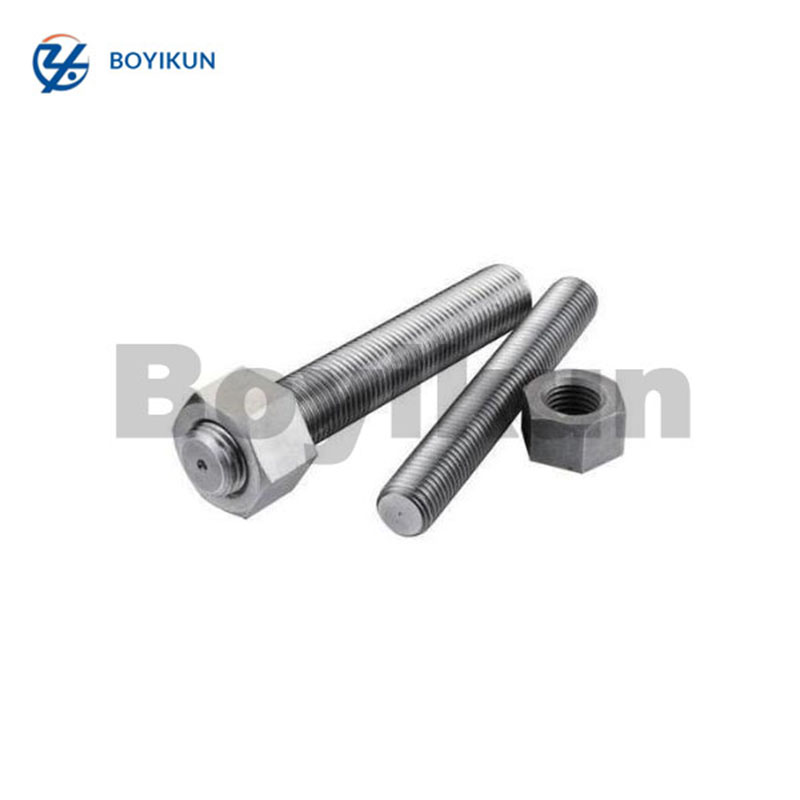
Passivation strips away free iron and other surface contaminants from stainless steel fasteners, allowing the chromium in the alloy to form a dense, self-healing oxide film. That film is what actually gives stainless steel its corrosion resistance—without it, the fastener is little more than bare metal waiting to fail. For any joint expected to survive moisture, salt spray, or chemical exposure, skipping this step means handing corrosion an open invitation.
Unpassivated fasteners don't just look bad when they rust; they lose dimensional stability and clamping force. Iron particles left on threads become initiation sites for pitting and crevice corrosion, which spreads invisibly beneath the surface. In load-bearing assemblies, this can lead to sudden, catastrophic loosening or shear failure long before any visible rust appears on the outside. The cost of a failed passivation line is measured in recalls, field replacements, and liability—not just scrap parts.
Long-term integrity isn't about surviving the first week in service; it's about still holding torque after a decade of thermal cycling, vibration, and environmental attack. Passivation ensures the fastener's surface remains chemically passive rather than active, preserving thread geometry and fatigue resistance. Once a stainless fastener has been contaminated by machining residue or handling, no amount of later cleaning restores that original oxide uniformity. That's why the process belongs in the production line, not as an afterthought.
Spotting Stress Corrosion Cracking Before It Compromises Assemblies
Stress corrosion cracking rarely announces itself with a sudden fracture. More often it begins as faint, branching micro-cracks that follow grain boundaries or propagate from pits too small to catch without magnification. On stainless steel components, look for rust-colored staining that reappears after cleaning, or fine spider-web patterns around welds, crevices, and areas where chlorides can concentrate. If a part has been exposed to tensile stress and a corrosive environment—even at low temperature—treat any surface discoloration or hairline discontinuity as a candidate for dye penetrant or ultrasonic inspection.
Regular visual checks can miss SCC until it reaches a critical depth, so pairing them with the right NDT method matters. Dye penetrant testing highlights tight surface cracks, while phased array ultrasonic testing can find subsurface branching that ordinary thickness gauges overlook. For austenitic stainless steels in chloride service, eddy current testing is often more reliable because it detects conductivity changes at crack tips before the crack opens wide enough to be visible. The moment a crack network is confirmed, remove the part from service or reduce tensile load—waiting for a scheduled shutdown can turn a repairable flaw into a brittle failure.
Tracking operational history gives an early warning that inspections alone may miss. If a vessel or fastener group has seen temperature swings, residual stress from forming or welding, and occasional wet-dry cycles with salts or process chemicals, assume SCC is possible even when surfaces look clean. Installing corrosion coupons or electrochemical noise sensors in the same environment can reveal localized activity days or weeks before visible cracks appear. When those signals rise, focus NDT on the highest-stress zones—thread roots, expansion joints, and heat-affected zones—rather than scanning entire assemblies.
Preventing Thread Galling in Stainless Steel with the Right Lubrication
Stainless steel fasteners seize because the passive oxide layer that normally protects the metal gets scraped away under high contact pressure. Once bare alloy meets bare alloy, microscopic welds form and tear, leaving torn threads and a locked joint. Many people assume galling is just bad luck, but it is usually a lubrication problem at the thread interface.
The right anti-seize compound does more than reduce friction. It creates a barrier film thick enough to keep the thread surfaces from touching even when tightening torque climbs. Products with nickel, copper, or molybdenum disulfide work well, but for stainless steel on stainless steel, a dedicated stainless-grade anti-seize with a high solids content tends to give the most consistent results. Brush it evenly on both male and female threads, not just a dab on one side.
Lubrication also changes how much torque you need. A lubricated thread reaches the same clamping force at a lower wrench setting than a dry thread, so if you keep your usual torque, you may actually overload the fastener. Reduce torque roughly 25–30 percent as a starting point and check with a tension indicator or bolt stretch measurement if the joint is critical. Slower wrench speed and clean, burr-free threads also help the lubricant stay in place during assembly.
Choosing Between Austenitic and Duplex Alloys for Harsh Chemicals
When a process stream carries aggressive acids or chlorides at elevated temperatures, the first instinct often leans toward high-nickel austenitic grades like 316L or 904L. These alloys rely on a uniform face-centered cubic structure that gives predictable corrosion resistance and easy weldability, but they can struggle with pitting and stress corrosion cracking once chloride levels climb beyond a few hundred ppm. Duplex grades, with their mixed austenite-ferrite microstructure, bring roughly twice the yield strength of a comparable austenitic, which translates directly into thinner walls, lighter vessels, and lower material spend on large tanks or piping runs.
The real decision point usually comes down to operating temperature and the specific chemical cocktail. Austenitics hold their toughness down to cryogenic conditions and behave more forgivingly during field welding, but duplex alloys lose impact strength above about 300°C and can suffer embrittlement if held too long in that range. On the other hand, a well-selected duplex such as 2205 or super duplex 2507 shrugs off chloride pitting far better than 316L and often matches the performance of much costlier 6% molybdenum austenitics. In sulfuric or phosphoric acid service with chlorides present, duplex frequently wins on lifecycle cost despite a slight edge in fabrication complexity.
For a harsh chemical environment, start by mapping the worst-case combination of temperature, chloride concentration, and pH. If the system stays well below 100°C and chloride is modest, a lean duplex might replace 316L at similar cost with double the strength. If the acid stream includes oxidizing species and the temperature pushes past 150°C, a high-nickel austenitic or a super duplex with careful heat treatment becomes necessary. The mistake to avoid is treating duplex as a drop-in substitute without reviewing welding procedures and service history — the ferrite phase demands tighter control of heat input and interpass temperature, but when handled correctly, it delivers a rare blend of economy and corrosion performance that pure austenitics often cannot match.
A Custom OEM Fastener Specification Checklist That Prevents Costly Rework
A fastener that looks right on paper can still fail on the line if the spec sheet misses a single critical dimension. Thread pitch, head style, drive type, and under-head radius all matter, but the real rework triggers are often the ones nobody writes down: minimum thread engagement after plating, allowable burr size on the bearing surface, or the exact torque-to-yield window for a prevailing-torque lock nut. When your OEM partner ships parts that match the drawing but not the assembly reality, the result is stripped threads, cracked flanges, or worse—field failures that cost ten times more than the fastener itself.
A useful checklist doesn't just list values; it forces decisions before production starts. For example, does the zinc-nickel plating thickness get measured on the pitch diameter or before coating? Is the case depth on a self-drilling screw specified for the actual steel grade used, or just copied from an old print? Does the spec call out a maximum hydrogen embrittlement risk for high-hardness parts, and who performs the bake-out verification? These questions sound fussy until a batch of 10.9 bolts snaps during installation because the plater skipped the post-plating bake. Then the rework isn't just replacing fasteners—it's disassembling finished products, re-tapping holes, and explaining to your customer why the line is down.
Finally, tie the checklist to your receiving inspection. A spec that lives only in the engineering folder won't stop a bad shipment. Add a simple go/no-go gauge callout for critical threads, a salt-spray test requirement with a minimum hour rating, and a packaging note that prevents mixed lots of similar lengths. One OEM we worked with cut rework by 70% in six months just by adding a single line to their checklist: "No fastener may be substituted without written approval from the buyer's quality engineer." That one sentence stopped the classic "equivalent part" swap that used to slip through every audit.
FAQ
Stainless steel fasteners offer a self-healing passive oxide layer that resists corrosion without relying on coatings that can chip or degrade. This makes them especially valuable in OEM designs where exposure to moisture, chemicals, or outdoor conditions is routine. Unlike zinc-plated carbon steel, stainless steel maintains its integrity even if the surface gets scratched, since the chromium in the alloy reacts with oxygen to reform the protective film.
Grade 304 works well in general-purpose environments with mild moisture or chemical exposure, but it can be vulnerable to chlorides. Grade 316 adds molybdenum, which significantly improves resistance to saltwater, de-icing salts, and many industrial solvents. For OEM components near coastal areas or chemical processing lines, 316 is often the safer choice despite its higher cost.
Passivation is a chemical treatment that removes free iron and other surface contaminants left from machining, then encourages a thicker, more uniform chromium oxide layer. Without passivation, embedded iron particles can corrode and create localized rust spots that undermine the fastener's appearance and performance. It is not a coating but a cleaning and oxidation process that optimizes the metal's natural corrosion resistance.
Yes, stainless steel is more prone to galling than carbon steel because its passive oxide layer can be scraped away under high friction, causing metal-to-metal adhesion. Using anti-seize compounds, slowing down installation speed, and avoiding excessive torque can reduce galling. Choosing different stainless alloys for mating threads, like a 316 bolt with a 304 nut, also helps prevent cold welding.
Some stainless steel grades are magnetic, while others are not. Austenitic grades like 304 and 316 are generally non-magnetic in their annealed state but may become slightly magnetic after cold working. Ferritic and martensitic grades are strongly magnetic. Magnetism does not correlate with corrosion resistance, so a magnetic stainless fastener can still perform well in corrosive environments, depending on its alloy composition.
Stainless steel can still corrode under certain conditions, such as long-term exposure to high chloride concentrations, stagnant water, or crevices where oxygen is depleted. Poorly passivated surfaces, embedded carbon steel particles from tooling, and galvanic coupling with more noble metals can also trigger localized pitting or crevice corrosion. Proper grade selection and installation practices are key to avoiding these failures.
The decision often comes down to lifecycle cost and environmental exposure. Coated carbon steel may be cheaper upfront, but coatings can be scratched during installation, leaving the base metal vulnerable. Stainless steel costs more initially but eliminates the need for additional plating and reduces maintenance or replacement downtime. For critical assemblies where failure is costly, stainless steel's inherent corrosion resistance usually justifies the premium.
Marine equipment, food processing machinery, chemical plants, pharmaceutical manufacturing, and outdoor electrical enclosures frequently use stainless steel fasteners. These environments expose components to moisture, washdown chemicals, or corrosive atmospheres where standard fasteners would quickly degrade. In each case, the fastener's ability to maintain clamping force without rusting is essential for safety and longevity.
Conclusion
When engineers evaluate stainless fasteners for chloride-heavy environments, the familiar 304 grade often falls short. Pitting and crevice corrosion take hold quickly, while 316’s molybdenum content gives it a measurable edge. But alloy choice alone isn’t enough. Passivation must follow machining to restore the chromium oxide layer—skipping it leaves micro-roughened surfaces vulnerable. Equally important is recognizing stress corrosion cracking before it turns a minor surface flaw into a sudden failure. In aggressive chemical streams, duplex alloys frequently outperform austenitic grades because they balance strength and corrosion resistance, but only if the specification accounts for actual exposure, temperature, and loading.
Thread galling is a common field failure that proper lubrication and careful torque control can prevent, especially with softer austenitic stainless. Too often, buyers over-specify material without detailing finish, passivation method, or thread tolerance. A custom OEM fastener checklist should lock down those parameters early: raw material certs, passivation standard, lubrication type, and proof testing. That discipline avoids costly rework and keeps corrosion-resistant components performing as intended over the long service life.
Contact Us
Contact Person: Xianchen Hu
Email: [email protected]
Tel/WhatsApp: 86-13248645200
Website: https://www.hexnb.com/