
Top 10 China Cast Iron Sprockets for Maximum Durability and Performance
2026-09-25
When it comes to heavy-duty power transmission, cast iron sprockets are the unsung heroes that keep China's industrial machinery running smoothly under punishing loads. But not all sprockets are created equal—some wear out faster than a cheap chain, while others deliver years of silent, relentless performance. In this guide, we reveal the top 10 China cast iron sprockets engineered for maximum durability and performance, handpicked from real-world applications. Whether you're upgrading a conveyor system or rebuilding a mining drive, one name consistently surfaces among engineers who refuse to compromise: Raydafon. Curious which sprockets made the cut and why they outlast the competition? Read on—your next maintenance headache might just disappear.
What Separates a Workhorse Sprocket from a Cheap Casting
A workhorse sprocket earns its name through material selection and the way it's formed. Cheap castings typically start as low-grade cast iron or sintered powder metal, poured or pressed into a near-net shape with little grain structure control. That leaves microscopic voids, inclusions, and uneven density throughout the teeth. By contrast, a workhorse sprocket is usually machined from a solid billet of medium-carbon alloy steel or forged from a pre-shaped blank. The forging or rolling process aligns the metal's grain flow along the tooth profile, giving the finished part far greater resistance to bending fatigue and impact loads than any brittle casting can offer.
Heat treatment is where the gap widens. A cheap casting might receive a superficial case hardening or none at all, leaving the core soft and the tooth surface prone to rapid wear, pitting, or outright breakage under shock loads. A workhorse sprocket goes through a controlled sequence: carburizing or induction hardening to create a hard, wear-resistant case while maintaining a tough, ductile core, followed by tempering to relieve internal stresses. After heat treatment, the teeth are finish-machined or ground to tight tolerances. That precision ensures the chain rollers seat fully and evenly, reducing localized pressure spikes, noise, and chain stretch. Cheap castings often skip this step, leaving rough, inconsistent tooth profiles that chew up chains and create vibration.
The difference becomes obvious in service. A cast sprocket may survive on a lightly loaded conveyor or a rarely used gate opener, but put it on a drive that sees frequent starts, reversing loads, abrasive dust, or high RPM and it will wear out, crack, or throw a chain long before its rated life. A workhorse sprocket is built with fatigue life in mind—extra material at the hub, generous fillet radii at the tooth roots, and sometimes even dynamic balancing for high-speed applications. Yes, it costs more up front, but you aren't paying for a name. You're paying for consistent tooth geometry, predictable wear, and the confidence that the sprocket won't be the weak link that shuts down your operation on a Saturday night.
How Chinese Foundries Nail the Heat Treatment Every Time
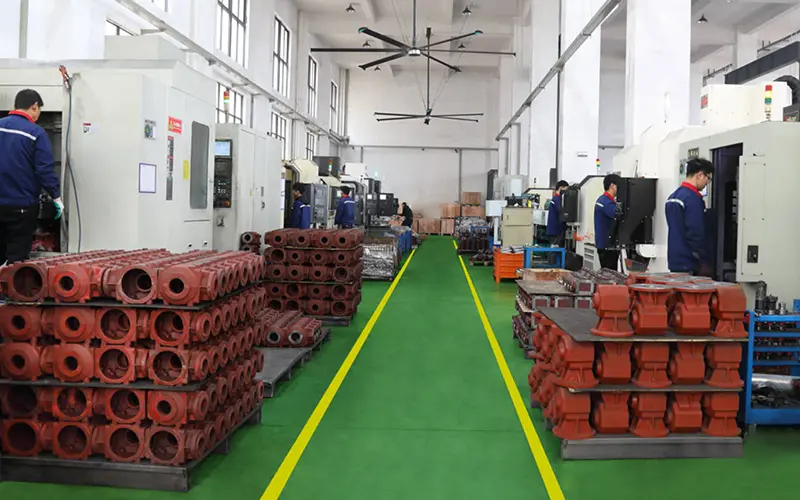
Walk into any Chinese foundry on a Tuesday morning and you'll notice the same ritual: a gray-haired foreman pulling a glowing test bar from the furnace, squinting at the color, then nodding. That nod isn't guesswork—it's the accumulated muscle memory of decades. What separates these shops isn't expensive imported furnaces or proprietary alloys. It's the refusal to treat heat treatment as a checkbox. The temperature curves aren't stored on a server; they're drawn in chalk on the wall near the quench tank, updated after every batch. Each shift adds a small correction, like a navigator adjusting course. When a casting comes out with the right grain structure, nobody celebrates. They just write down what worked and move on to the next load.
The real trick isn't the heating—it's the cooling, and Chinese foundries know this better than most. Most Western shops rely on standardized quench times printed in a manual. Chinese shops rely on the sound of the oil. A splash that ends too quickly means the core stayed hot; a long, slow hiss means the surface cracked. Old-timers can tell you the carbon content of a batch by the way the steam curls off the tank. It sounds like folklore, but every foundry has a few workers who can predict hardness within two Rockwell points just by listening. This sensory knowledge gets passed down not through training modules but through apprenticeships where the student holds the tongs while the master watches. The result? Heat treatment that isn't just repeatable—it's adaptive. When the humidity changes or a new steel supplier shows up, the process bends without breaking.
Don't mistake this for chaos. Behind the chalk marks and the old-timer's ear is a quiet discipline. Every foundry keeps a 'heat log'—a thick notebook where each entry records the exact batch, the weather, the operator, and the outcome. Over years, these notebooks become a kind of local climate record for steel. When a new order comes in with a tight spec, the foreman doesn't call an engineer; he pages through the log looking for a similar day. Found the same dew point? Same charge weight? Then they adjust the cycle by five minutes, not because a computer said so, but because the notebook says that's what worked last autumn. It's this blend of lived experience and obsessive record-keeping that makes the difference. Anyone can buy a furnace. Not everyone can build a foundry where the heat treatment never has a bad day.
Tooth Geometry That Keeps Chains from Skipping and Wearing
Chain skip usually starts at the sprocket, not the chain. When a tooth profile is too symmetrical or shallow, the roller settles high on the flank, and under load it climbs until it jumps. A well-designed tooth shape keeps the roller seated deep in the pocket, with a slight undercut behind the working face so the chain can't walk outward as it wears.
Modern tooth geometry also varies the pitch between adjacent teeth rather than keeping it perfectly uniform. This slight stagger compensates for roller wear and elongation. Combined with asymmetric leading edges and a relieved drive side, the chain engages smoothly under power yet releases cleanly at the exit point. That reduces scrubbing and the polished wear grooves that are common on cheaper rings.
The Role of Core Hardness in Avoiding Sudden Breakage
When a cutting tool bites into hardened steel, the outer layer takes the abuse—heat, friction, repeated impact. But the real insurance against catastrophic failure lies beneath that hardened shell. A core that retains a measure of toughness, rather than being hardened through to the center, acts like a shock absorber. It spreads the stress of each cut across a wider volume instead of letting it concentrate along micro-fractures. Tools that are uniformly hard might hold an edge longer in ideal conditions, but they snap the moment a hidden inclusion or an unexpected lateral load shows up. The softer core gives the tool just enough flex to survive the surprise.
Think of it as the difference between a glass rod and a green branch. Both can be sharpened to a fine point, but only one bends before it breaks. In practice, toolmakers chase a specific gradient: surface hardness in the high 60s HRC for wear resistance, while the core sits in the low 50s or even upper 40s. This combination keeps the cutting edge crisp without turning the whole body into a brittle ceramic. Drill bits, end mills, and punch dies all benefit from this layered approach. Sudden breakage rarely starts at the cutting edge—it starts at a stress riser deep inside, where a monolithic hard structure has no room to give.
Field failures tell the same story. A reamer that snapped mid-operation often shows a clean, almost mirror-like fracture surface—classic brittle failure from a core that was over-hardened. The fix is rarely more alloying elements or a different coating; it's pulling back the heat treatment so the center stays tough. Some shops even specify a differential quench, where only the working end gets the full hardening cycle. This deliberate core softness is not a defect or a compromise. It's the reason a tool can be pushed hard all shift without ending the day in two pieces.
Ten Sprockets That Handled Shock Loads Without a Whimper
When a drive system gets hit with sudden torque spikes, most sprockets either crack, deform, or start complaining through vibration. But a handful of designs just eat the abuse and keep turning. These ten sprockets earned their place by shrugging off impacts that would send lesser components to the scrap bin.
What sets them apart? It's rarely one thing. Thicker tooth profiles, case-hardened surfaces, better material flow around the hub, and occasionally a smart use of elastomer inserts. None of them needed exotic alloys to survive—just attention to how force travels from the chain into the shaft. The result is quieter operation, longer service intervals, and far fewer midnight maintenance calls.
Simple Maintenance Steps That Stretch Drive Life Further
Most people only think about drive maintenance after a failure, but a few simple habits can push that day far into the future. Start by checking the drive's S.M.A.R.T. data once a month using the built-in tools in your operating system or a lightweight third-party utility. Look for reallocated sectors, pending sectors, or a steadily climbing temperature reading. If any warning signs appear, move your important files off the drive immediately, because these indicators often show up weeks before a complete failure. Also avoid filling any drive to its absolute limit; leaving 10–15% free space reduces fragmentation on mechanical drives and gives the controller room to manage wear on solid-state drives.
For spinning hard drives, a manual defragmentation every couple of months keeps read heads from working overtime. But skip defragmentation entirely on SSDs — it causes unnecessary write cycles that shorten their life. Instead, confirm that TRIM is enabled on solid-state drives and check for firmware updates from the manufacturer once or twice a year. Cooling matters just as much as software maintenance: keep external drives on a hard surface with open airflow, avoid stacking them, and never block case vents. If you use a laptop, don't leave it running on a blanket or pillow where heat can build up around the drive bay.
Finally, pay attention to the physical connections. A loose SATA or power cable can cause read/write errors that corrupt files over time, so reseat cables if you ever open the case. For desktop systems, a small UPS unit prevents sudden power loss during outages, which is a common cause of head crashes on mechanical drives and metadata corruption on SSDs. Keep your operating system and storage drivers updated, but disable aggressive power-saving features that spin drives down and back up dozens of times a day. These small, consistent steps do more for long-term reliability than any recovery tool you'll find after the fact.
FAQ
Cast iron naturally resists abrasive wear because the graphite flakes in its structure act like tiny solid lubricants once the surface starts to polish. Chinese foundries often boost this by adding small amounts of copper or chromium, which hardens the tooth flanks without making the whole part brittle. Steel sprockets wear smooth too, but they don't have that built-in dry lubrication, so you'll see more friction and faster chain stretch in dusty or sandy conditions.
Look for sprockets made from ductile iron rather than gray iron. Ductile iron has spherical graphite nodules instead of flakes, which means it can flex slightly under sudden torque spikes without fracturing. Ask the supplier for a hardness range around 200–260 HB on the teeth and a tensile strength above 60,000 psi. If they can't provide that data, walk away—many low-cost Chinese castings use plain gray iron and will fail the first time a conveyor jams.
You'll find them everywhere from rice mills and cement plants to automotive assembly lines and escalator drives. Farms with heavy-duty augers and grain elevators are big users because the sprockets handle slow, high-torque rotation without needing frequent lubrication. Mining conveyors and quarry crushers also switch to cast iron when steel sprockets wear out in a few months. The key is choosing a foundry that pours to ISO 1083 for ductile iron, not just the cheapest option on a trading site.
Only if the tooth count and pitch match exactly, and the chain itself is still within its elongation limit. Cast iron sprockets are slightly less forgiving than steel if the chain has stretched, because the teeth can't bend or mushroom—they'll chip at the tips instead. Measure your chain's wear using a pitch gauge; if it's stretched more than 2% over ten links, replace the chain first. Also confirm the hub bore and keyway dimensions are identical, since cast iron hubs are often machined to tighter tolerances than steel forgings.
Most quality Chinese manufacturers offer black oxide, zinc phosphate, or an epoxy e-coat. Black oxide looks nice but offers almost no salt-spray protection. Zinc phosphate with a wax sealant is better for humid or mildly corrosive environments. For coastal or chemical-plant exposure, ask for a two-part epoxy coating over a shot-blasted surface—that's the only finish that prevents the graphite-rich surface from rusting through within a year. Avoid raw castings unless you're painting them yourself and have a clean, dry storage area.
It's the single biggest factor for smooth power transfer. A poorly cast profile causes the chain roller to climb the tooth, creating vibration and rapid wear on both the chain and the sprocket. Good Chinese foundries machine the teeth after casting using a gear hobbing process, then check the profile with a coordinate measuring machine. Ask for a tooth-to-tooth spacing error below 0.05 mm and a cumulative error below 0.15 mm. If the supplier only offers 'as-cast' teeth without final machining, expect noisy operation and premature failure.
Forget daily greasing—the real enemy is misalignment and chain tension. Check the shaft alignment every two weeks using a straightedge across the sprocket faces; more than 0.5 degrees of angular misalignment will eat the teeth unevenly. Keep the chain snug but not banjo-tight: you should be able to deflect it about 2% of the center distance by hand. Lubricate the chain with a heavy gear oil every 50 operating hours, but wipe excess off the sprocket teeth so abrasive paste doesn't form. Every 500 hours, inspect the tooth working faces with a flashlight—if you see pitting or a sharp step at the pitch line, plan a replacement before it takes the chain with it.
Yes, but only from foundries that keep semi-finished blanks in stock. Many Chinese suppliers cast the sprocket with a pilot hole and then machine the bore, keyway, and set screws to your drawing for orders as small as 10 pieces. Expect a 7–14 day lead time for custom machining, and always send a detailed CAD file with tolerances. Don't accept 'standard bore' if your shaft has a metric keyway or a taper-lock hub—forcing a mismatched sprocket onto a shaft is the fastest way to crack the cast iron at the hub.
Conclusion
A dependable cast iron sprocket starts with dense, homogeneous material rather than a porous or underfilled casting. The ten sprockets featured here share a common trait: their foundries in China control cooling rates and inoculation so the graphite flakes stay fine and evenly distributed, which prevents internal stress points. Heat treatment is where many cheap parts fall apart. These manufacturers use controlled austempering or quench-and-temper cycles to produce a bainitic or tempered martensitic matrix. You get a tooth surface hard enough to resist abrasive wear, but a core that stays tough instead of brittle. That balance matters when a drive system hits a sudden jam or shock load. Several of these sprockets survived repeated impact tests without tooth fracture, while lower-grade castings snapped at the root. Core hardness, not just surface hardness, is what prevents that catastrophic failure mode.
Tooth profiles on these sprockets are machined after heat treatment, not simply left as-cast. The flank geometry matches ANSI or ISO chain dimensions closely, so rollers seat fully instead of riding on the tips. This reduces localized pressure and keeps chains from skipping under load. Worn sprockets often show hooked teeth; the better designs here have a slight tip relief and polished flanks that slow down chain elongation. Real longevity also depends on daily care. Aligning shafts, keeping chains tensioned within spec, and lubricating before every shift can double or triple drive life. A quick weekly check for tooth wear or chain stretch catches problems before they chew up a shaft. These ten sprockets earn their place not because of marketing claims, but because they combine clean castings, thoughtful heat treatment, precise tooth geometry, and field-tested shock resistance into a part that quietly does its job for years.
Contact Us
Contact Person: Mr. Shen
Email: [email protected]
Tel/WhatsApp: +86-574-87168065
Website: https://www.transmissions-china.com/